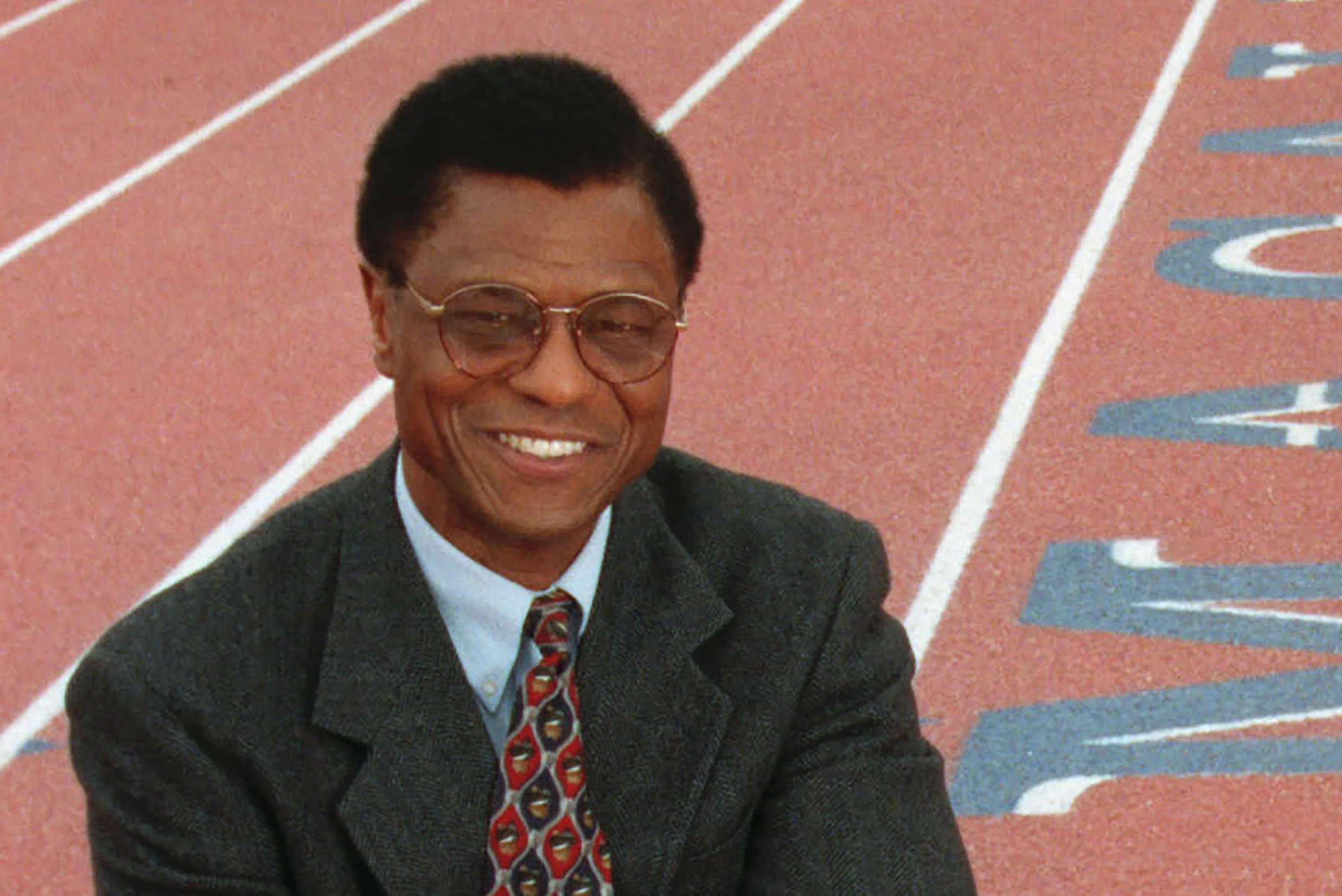
Irv Cross's Groundbreaking Legacy: Pioneering Diversity in Sports Broadcasting
Irv Cross, the first Black co-host of a network sports show, "The NFL Today," revolutionized sports broadcasting, paving the way for future diverse talent. His enduring legacy is celebrated.

Irv Cross, a name synonymous with trailblazing achievement and groundbreaking diversity in media, fundamentally reshaped the landscape of sports broadcasting. As the first Black co-host of a network sports show, he shattered barriers on CBS's "The NFL Today" in 1975, initiating a trend that continues to resonate and inspire. His journey from an overlooked seventh-round draft pick to a Pro Bowl cornerback and then to a storied career in front of the camera exemplifies resilience, meticulous preparation, and a profound understanding of the game. Cross’s remarkable success not only solidified his own place in history but also laid a crucial foundation for subsequent generations of African American sports journalists and analysts, proving that talent and expertise transcend racial lines in an industry that had long lacked diverse representation.
Background and Context: A Legacy Rooted in Struggle and Determination
Irv Cross's ascent to national prominence was far from preordained. Born into a family of 14 children in Hammond, Indiana, he understood early on the imperative of hard work and self-reliance. As the first in his family to attend college, his time at Northwestern University instilled in him a discipline that would become a hallmark of his professional life, both on the field and in the studio. His NFL career, spanning nine years with the Philadelphia Eagles and Los Angeles Rams, showcased his athletic prowess, but it was his post-playing career where he truly made an indelible mark. According to the Philadelphia Eagles, Cross never envisioned himself as a pioneer akin to his hero, Jackie Robinson, whom he had met as a teenager. Yet, his commitment to excellence, coupled with an unwavering work ethic, propelled him into a role that undeniably broke barriers in sports media. "I was going to work harder than anybody else. I was going to know more about pro football than anybody. If things didn't work out, it wouldn't be because I wasn't prepared," Cross detailed in his book, "Bearing the Cross: My Inspiring Journey From Poverty to the NFL and Sports Television," co-authored with Clifton Brown, a member of the Black Sportswriters Hall of Fame. This philosophy became the bedrock of his transformative career.
Key Developments: Redefining Sports Broadcasting with The NFL Today
The turning point in Cross's broadcasting career, and indeed for sports television, arrived in 1975 when CBS reimagined its "NFL Today" pregame show. This innovative format brought together veteran journalist Brent Musburger, trailblazing female co-host Phyllis George, and Irv Cross, making him the first Black broadcaster and color analyst on a major network sports program. The show further expanded its diverse lineup a year later with the inclusion of legendary oddsmaker Jimmy "The Greek" Snyder, and later, Jayne Kennedy, who became the first Black woman on network sports television. Clifton Brown, Cross’s co-author, emphasized the radical nature of this lineup: "They were going to have a different flavor. They never had a woman or a Black guy like Irv Cross, and then after a couple of years, Jimmy the Greek. It was cutting edge," as quoted by the Philadelphia Eagles. This ensemble quickly transformed "The NFL Today" into the most-watched pro football pregame show, a testament to the undeniable chemistry and diverse perspectives it offered. Cross, who had started at CBS as a color analyst in 1971, found his stride on "The NFL Today" due to his encyclopedic knowledge of the game, his relentless preparation, and his affable personality. Brent Musburger himself acknowledged Cross's invaluable contribution, stating in "Bearing the Cross" that "It was comforting to have someone like him alongside, because if there was a highlight I was uncertain about, or if there was a player I wasn't sure about, I could turn quickly to Irv and he'd pick it up. That was security for me when I had to do all the highlights." This foundational trust and collaborative spirit were essential to the show's unparalleled success and its role in reshaping how sports were presented to a national audience.
Analysis: The Enduring Impact of Representation in Media
Irv Cross's pioneering role on "The NFL Today" transcends mere occupational achievement; it represents a critical inflection point in the broader conversation about diversity and representation in media. Before Cross, the faces and voices delivering sports analysis on national television were overwhelmingly homogenous. His presence at the desk was a powerful visual statement, demonstrating to millions of viewers that intelligence, insight, and charisma were not confined to one demographic. This visibility was particularly impactful given the show's immense popularity and its direct connection to the fabric of American culture – professional football. His success served as a tangible example that merit, informed by diverse lived experiences, could enhance the media product and resonate with a wider audience. The challenges he faced, as hinted by Jayne Kennedy's experience regarding potential network affiliate reactions to two Black co-hosts, underscore the systemic barriers that existed. Kennedy recounted how she lacked media training from CBS, finding support only in Cross, who offered crucial guidance after her initial, high-pressure interview. This highlights not just Cross’s individual generosity but also the informal mentorship networks that pioneers often build to support those who follow. The ripple effect of Cross’s groundbreaking work is clearly seen in the careers of prominent African American sportscasters like James Brown, Tom Jackson, and Curt Menefee, all of whom acknowledge him as an inspiration and a blueprint for success in the field. Their ability to reach the highest echelons of sports broadcasting directly correlates with the doors Cross courageously opened, transforming what was once an exception into a path for many.
Additional Details: Beyond the Broadcast Booth
Cross's influence extended beyond his on-air performance; he embodied the spirit of "giving back," a principle he often attributed to Jackie Robinson. As he wrote in his book, "I believe in the idea of giving back, of using your blessings to help others. That's what Jackie was about until the day he died." This ethos was evident in his interactions with colleagues like Jayne Kennedy. Kennedy vividly recalled her early days on "The NFL Today," navigating an environment largely unsupportive of her groundbreaking role. She noted that Cross was her singular source of encouragement and guidance, particularly after a challenging interview with then-Cleveland Browns Head Coach Sam Rutigliano. On that occasion, Cross told her, "You handled that like a pro, and said if you ever need anything, just let me know, and he was always there for me no matter what," as documented by the Philadelphia Eagles. This mentorship illustrates a deeper commitment to fostering diversity and inclusion, not just by being present but by actively supporting successors. Cross's legacy was formally recognized in 2009 when he received the Pro Football Hall of Fame's Pete Rozelle Radio-Television Award, an honor that cemented his status as a titan in both football and broadcasting. This accolade not only celebrated his individual achievements but also acknowledged the profound impact his career had on shaping the visual and cultural landscape of sports media. His departure from "The NFL Today" in 1990 marked the end of an era, but the foundation he built continues to serve as a cornerstone for diversity in the industry.
Looking Ahead: The Continued Evolution of Sports Media
The precedent set by Irv Cross for diverse representation in sports broadcasting remains a crucial benchmark in an ever-evolving media landscape. The sports world, as demonstrated by other recent developments, is in constant flux, from the emergence of new sports metropolises like Salt Lake City, which is aggressively building a robust sports scene with an eye toward future Olympic bids and MLB expansion, as highlighted by The New York Times, to the logistical and financial challenges facing major international events. For instance, World Cup host cities are currently grappling with significant funding shortfalls for security, raising "catastrophic" concerns just months before kickoff, according to Yahoo Sports. These complexities underscore the need for adaptable, insightful, and diverse voices in media to interpret and convey these stories to the public. The success of broadcasters like James Brown, Tom Jackson, and Curt Menefee, who stand on Cross's shoulders, reinforces the value of diverse perspectives in dissecting not just game-day action but also the intricate business, social, and political dimensions of sports. As the industry continues to globalize and diversify in content and audience, the foundational work of pioneers like Irv Cross will remain indispensable, guiding efforts to ensure that sports media authentically reflects the world it covers.
Related Articles

Salt Lake City Emerges as Next Sports Powerhouse Amidst World Cup Funding Crisis
Salt Lake City is rapidly transforming into a dominant force in U.S. sports with aggressive expansion plans, while 2026 World Cup host cities face a critical funding shortfall.