Could Mizzou Football's Landmark 2015 Boycott Inspire Future Student-Athlete Activism?
Examining the potential for a repeat of Mizzou football's 2015 boycott in today's college sports landscape, amidst evolving student-athlete rights and activism.

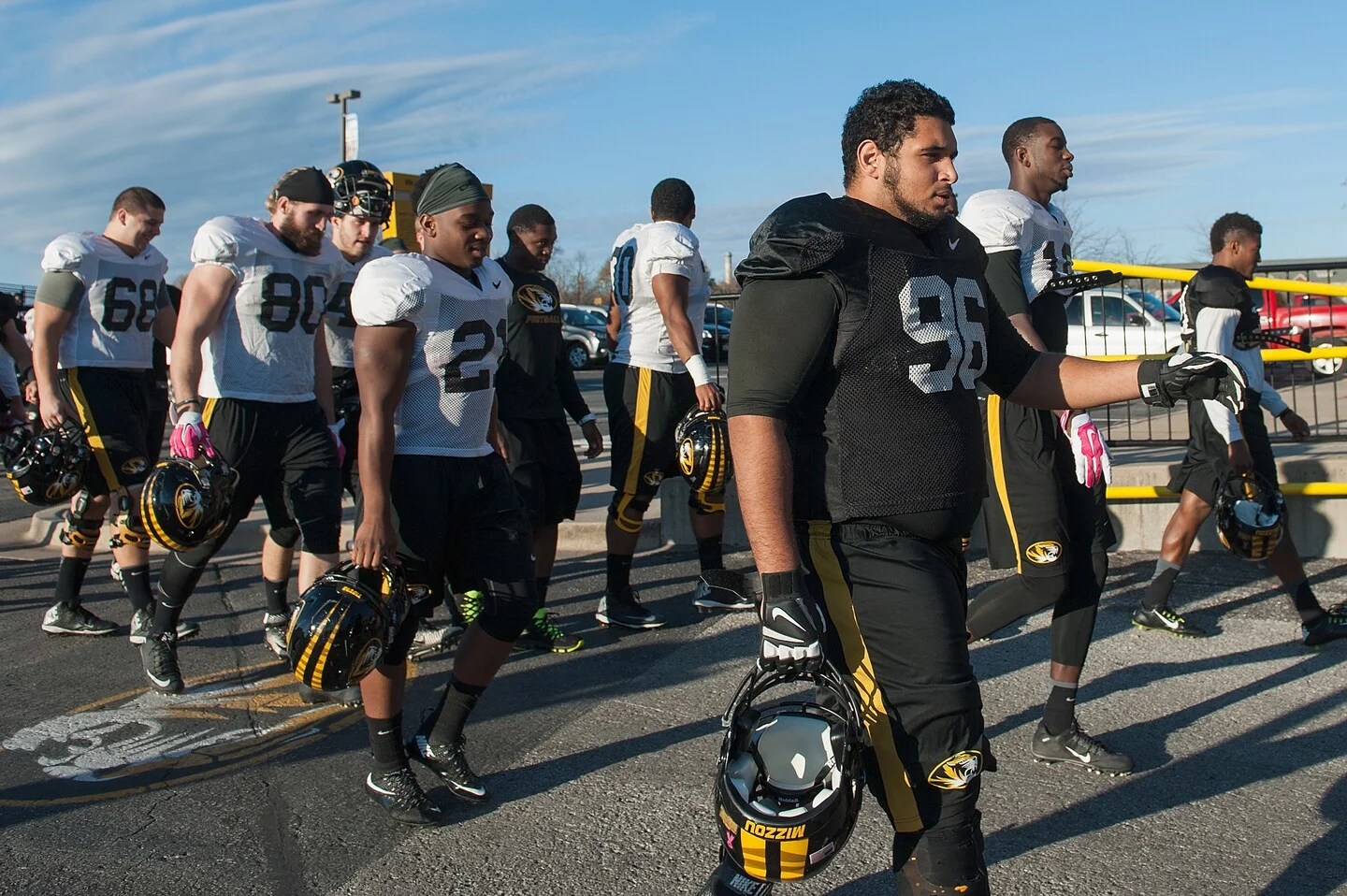
In November 2015, the University of Missouri found itself at the epicenter of a national conversation surrounding race, protest, and the powerful role of student-athletes in driving social change. The Mizzou football team's decision to boycott all athletic participation until UM System President Tim Wolfe resigned, a move made in solidarity with a hunger-striking student and amidst racially-charged campus protests, sent shockwaves through the NCAA and beyond. Nearly a decade later, as the landscape of college athletics undergoes seismic shifts, a critical question emerges: could such a coordinated and impactful boycott be replicated today, and what factors might enable or hinder such action? This pivotal moment in Mizzou's history serves as a potent reminder of the collective power student-athletes hold, a power that could be re-ignited in new ways given contemporary dynamics.
Background and Context
The events of fall 2015 at the University of Missouri were a culmination of simmering racial tensions and perceived institutional inaction. Amid persistent racist incidents on campus, graduate student Jonathan Butler initiated a hunger strike, vowing to starve until UM System President Tim Wolfe was removed from his position. The situation reached a critical juncture when members of the Mizzou football team, predominantly Black athletes, announced their solidarity with Butler and the broader student movement. As the Columbia Missourian reports, this dramatic declaration to boycott all athletic activities amplified the protests exponentially, transforming a campus-specific issue into a national talking point. The team's boycott, particularly in a high-profile sport like football, wielded immense financial and reputational pressure. Coaches, administrators, and even the Governor were forced to reckon with the athletes' demands, ultimately leading to Wolfe's resignation and the successful conclusion of Butler's hunger strike. This response underscored the unique leverage that organized athlete activism can possess.
Main Developments: The Mizzou Model and Modern Activism
The Mizzou football team's boycott in 2015 represented a watershed moment, demonstrating the tangible impact student-athletes could have when they collectively withdrew their labor and visibility. The success of the Mizzou model—football players uniting around a social justice cause to force institutional change—has undoubtedly served as a blueprint, or at least a powerful precedent, for subsequent athlete activism. While the immediate aftermath saw the university focus on preventing a repeat, as noted by the Columbia Missourian, the broader landscape of college sports has continued to evolve in ways that might both encourage and complicate similar actions. The rise of Name, Image, and Likeness (NIL) legislation, for example, has given student-athletes unprecedented economic power and individual agency. This newfound ability to monetize their personal brands means that athletes are no longer solely dependent on their institutions for financial stability, potentially emboldening them to take principled stands without fearing complete financial ruin. Furthermore, the increasing prominence of sports-related entertainment, as evidenced by a multitude of Sports Emmy nominations for entities like the NFL, highlights the vast commercial ecosystem surrounding athletics. The NFL.com article detailing its 32 Sports Emmy nominations, while not directly related to college sports, underscores the broader cultural and economic significance of major sports leagues and the content they produce. This massive platform means that any disruption, especially from a high-profile college sport like football, can garner immediate and widespread media attention, impacting sponsorships, broadcast deals, and public perception – all powerful levers in the hands of boycotting athletes. Even the integration of sports into popular culture, such as The Athletic's "Connections: Sports Edition" puzzle, as described in The New York Times, demonstrates the pervasive nature of sports in daily life, suggesting that athlete actions resonate far beyond the confines of the playing field or campus.
Analysis: What This Means for Student-Athlete Power
The Mizzou boycott of 2015 stands as a powerful case study in the efficacy of collective action by student-athletes. Today, several factors suggest that the potential for similar, or even more widespread, activism has increased. The most significant development is the advent of Name, Image, and Likeness (NIL) rights. Historically, one of the primary deterrents for student-athletes considering a boycott was the implicit threat to their scholarship, their future professional prospects, and their ability to earn a living. With NIL, athletes, particularly those with significant social media followings or established brand deals, now possess a degree of financial independence that lessens their reliance on institutional good graces. This makes them less vulnerable to punitive measures and grants them a stronger bargaining position. Furthermore, the broader societal shift towards greater awareness and support for social justice movements provides a more fertile ground for athlete protests. The expectation for public figures, including athletes, to speak out on important issues has grown, and silence is often interpreted as complicity. This cultural climate, combined with enhanced communication tools and social media platforms, allows athletes to organize, disseminate their message, and garner public support far more rapidly and effectively than before. While there are still significant power imbalances, the lessons learned from Mizzou, coupled with evolving athlete rights and a more receptive public, mean that the threat of a collective withdrawal of labor is a far more credible and potent tool in the modern collegiate sports landscape.
Additional Details: Hurdles and Opportunities for Replication
While the blueprint for a Mizzou-style boycott exists, replicating its success today is not without potential hurdles. The NCAA and individual institutions have arguably learned some lessons from 2015, and might be more proactive in addressing student grievances or more adept at framing student protests. There's also the question of unity. The Mizzou boycott was successful largely due to the collective resolve of dozens of football players, supported by their coaching staff. Achieving such a broad consensus on a contentious issue, especially across diverse locker rooms and different sports, can be challenging. However, the rise of student-athlete advocacy groups and unions, albeit in nascent stages, could provide the organizational structure and legal backing needed to facilitate future collective actions, transforming spontaneous protests into more sustained and strategic movements. The visibility of college athletics, as underscored by the NFL's significant media presence highlighted in the NFL.com article, also presents both a risk and an opportunity. A boycott has the potential to attract immense media scrutiny, which can either amplify the athletes' message or lead to unfavorable public relations depending on how it's handled. The ability of athletes to leverage social media directly, bypassing traditional media gatekeepers, further democratizes their communication strategy, allowing them to control their narrative and appeal directly to a global audience, as showcased by the ongoing cultural integration of sports into daily life through platforms like "Connections: Sports Edition" from The New York Times. This direct access to an audience means that organized athletes have a powerful tool to shape public opinion and maintain pressure on institutions.
Looking Ahead: The Evolving Landscape of Student-Athlete Power
The specter of the 2015 Mizzou boycott continues to loom over collegiate athletics, serving as a powerful reminder of the potential for student-athlete activism. As the college sports world continues its trajectory of commercialization and professionalization, the leverage held by athletes is only likely to grow. The legal and economic shifts, particularly around NIL, have fundamentally altered the power dynamics. Future boycotts, should they occur, might not mirror the 2015 events precisely. They could be less about specific institutional leadership and more about wider systemic issues, such as athlete revenue sharing, health and safety, or even broader societal injustices. What is clear, however, is that the era of student-athletes being seen purely as amateur performers is rapidly fading. They are increasingly recognized as influential figures, capable of wielding significant power, and the lessons from Mizzou suggest that when united, their voices can indeed precipitate profound change. The conversation is no longer "if" athletes will use their platform to demand change, but rather "when" and "how" that power will be exercised next.
Related Articles
Summit League Semifinals Heat Up as College Sports Future Debated Amidst Trump Roundtable
As Summit League basketball semi-finals take center stage, President Trump's "Saving College Sports Roundtable" highlights NIL and governance challenges.