AI Vibe Coding: How One Founder is Making Tech Accessible, Safer, and Less Lonely for Boomers
Learn how Bill Atienza is using "vibe coding" and AI tools like ChatGPT and OpenClaw to empower older adults, combating loneliness and simplifying daily tasks, as explored in a recent Business Insider report.

In an era where technological advancements often seem to outpace the comfort levels of older generations, a unique approach termed "vibe coding" is emerging as a powerful bridge. Spearheaded by young innovator Bill Atienza, this method involves tailoring cutting-edge AI tools to meet the specific needs and preferences of older adults, transforming their relationship with technology from one of frustration to one of empowerment and connection. What began as informal tech support for neighbors has evolved into a mission to combat digital isolation and enhance the daily lives of seniors, leading to poignant outcomes like a widow conversing with an AI model trained on her late husband’s voice. Atienza’s story, detailed in a recent Business Insider report, highlights a growing trend: leveraging accessible AI to foster independence, security, and a renewed sense of belonging among the elderly.
The Genesis of Geriatric Tech Support
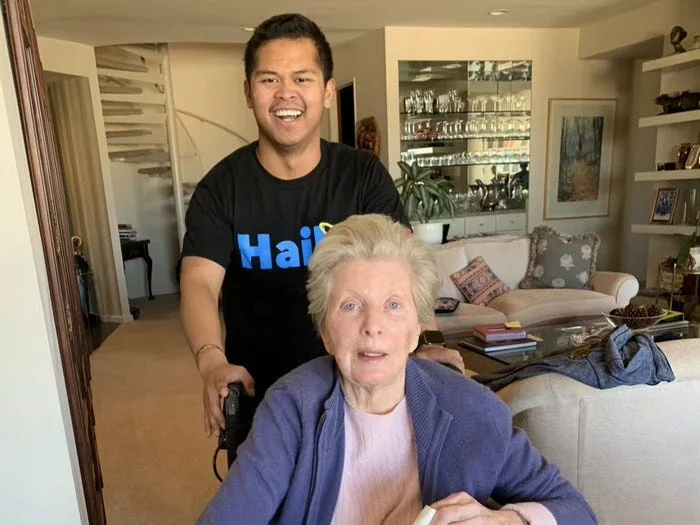
Bill Atienza’s journey into the world of tech support for older adults began organically, rooted in casual requests from neighbors. After a short stint at the Apple Store, Atienza found that more remunerative and fulfilling work lay in assisting older individuals with their digital dilemmas. These early interactions were eye-opening; many problems that seemed trivial to a Gen Zer, like resetting a Facebook password, represented significant hurdles for baby boomers. This insight led him to co-found Hailo, an on-demand technology support platform. Hailo aimed to address these common issues, often finding that simple tasks could escalate into broader technological overhauls within a client's home. Atienza recounts how he would start with a "MacBook cleanup" only to end up addressing a myriad of other tech-related challenges for his clients, demonstrating the widespread need for personalized and patient tech assistance among this demographic. His natural aptitude for connecting with older people, coupled with a deep satisfaction in solving their problems, laid the groundwork for his later foray into AI education.
From Basic Repairs to Advanced AI Integration
Atienza’s work quickly evolved beyond troubleshooting. As AI technologies matured, he began to introduce them to his clients, initially facing skepticism. He notes that the "first wave of AI wasn't really helpful for them," likely referring to more generic applications or abstract concepts that didn't immediately demonstrate tangible benefits. However, the introduction of "agentic AI platforms" like OpenClaw and Perplexity proved to be a turning point. These tools, capable of performing specific tasks and interacting more dynamically, resonated deeply. Atienza helped integrate these AI agents into daily routines, from setting medication reminders to managing complex paperwork. One former client, an 80-year-old landlord, was particularly keen on using AI for legal documentation, learning to develop "OpenClaw skills" to create terms for his properties and tenants. The ability of AI to automate and simplify such critical, often stressful, tasks quickly made it indispensable for these users, proving that with the right guidance, older adults could not only adopt but also master advanced technological tools.
The concept of "vibe coding," as coined by Atienza, describes the rapid development of custom applications, often in less than an hour, tailored to individual needs. This bespoke approach transcends typical software development, where projects once took "months or years to create." For many of his older clients, this meant an AI solution that could perform tasks with "a single click or conversation." This transformative power extends beyond mere utility; it addresses profound emotional needs. Atienza recounts helping a woman create a photo with "Nano Banana Pro" of her deceased husband, and then, most poignantly, aiding her in uploading his voice into Perplexity so she could "talk to her dead husband." This powerful, if unconventional, application highlights AI's potential to combat loneliness and provide profound emotional connection, as detailed in the Business Insider article. Another client, who needed constant reminders for his dog's seizure medication, had OpenClaw set up as his personal assistant, managing appointments and even researching medical treatments, effectively turning AI into a steadfast companion and caregiver. These personalized AI integrations aren't just about efficiency; they're about enhancing quality of life and fostering a sense of security and companionship for individuals who might otherwise feel isolated.
Analysis: Beyond the Screen — AI's Social and Emotional Impact
Atienza's "vibe coding" isn't merely a technical service; it represents a significant societal shift in how technology can address the often-overlooked emotional and social needs of an aging population. The profound impact reported by his clients – from feeling less lonely to re-establishing familial connections – underscores a critical aspect often missing from the mainstream discourse on AI and aging. While much of the tech industry focuses on efficiency and productivity, Atienza's work reveals AI’s capacity for emotional support and companionship. The case of the widow speaking with her late husband's AI-recreated voice is a deeply resonant example, pushing the boundaries of traditional grief support and highlighting AI's potential as a tool for emotional connection, however complex. This goes far beyond just providing information; it’s about crafting experiences that cater to deeply personal human needs, an area where technology has historically struggled. The quick adoption of these tools by older adults, even those initially wary, suggests an innate human desire for connection and assistance that AI, when properly "vibe coded," can effectively fulfill.
Furthermore, Atienza's model challenges the stereotype that older adults are inherently resistant to new technologies. Instead, it suggests that the barrier often lies in accessibility, personalized instruction, and demonstrably relevant applications. When AI is framed not as a complex system but as a direct solution to a practical problem or an emotional void, adoption rates increase dramatically. This personalized approach not only empowers the individual but also reduces the burden on family members who traditionally serve as the primary tech support for their elderly relatives. As Atienza himself noted, his clients are "catching up with AI so fast" that he might soon be "out of a job," because they can learn to use tools like ChatGPT as their "own tech support." This signifies a paradigm shift towards greater digital independence, fostering a sense of agency and confidence crucial for healthy aging. The implications extend across healthcare, social services, and even familial dynamics, as AI becomes an integral, yet often unseen, part of daily support systems.
Additional Details: The Broader AI Landscape and Accessibility
Atienza's initiative operates within a broader technological landscape where AI is rapidly evolving and gaining traction across various sectors. While his work focuses on personalized domestic applications for seniors, the rapid advancements in AI are evident in other areas, such as the K-Pop industry, where startups like Galaxy are leveraging AI to create virtual idols, disrupting traditional talent management models, as reported by The Japan Times. These concurrent developments highlight AI's versatility, capable of both hyper-personalization and large-scale entertainment. The common thread is the increasing sophistication of AI models that can generate content, perform complex tasks, and interact more naturally with humans.
The success of Atienza’s approach also underscores the importance of human-centric design in technology. His ability to connect with clients, understanding their unique psychological and practical needs, is paramount to AI's effective implementation in their lives. The rapid development of "vibe-coded" applications, taking "less than an hour," stands in stark contrast to traditional software development cycles, showcasing the agility and power of modern AI platforms. This speed allows for immediate feedback and iterative improvements, tailoring the technology precisely to the user's comfort level and specific requirements. Even Atienza's personal life has been positively impacted; he credits AI with helping him understand "how to talk to my dad," fostering a closer relationship and recovering lost time. This suggests AI’s potential to not only bridge generation gaps in technology but also to mend and strengthen personal bonds.
Looking Ahead: The Future of AI in an Aging World
The trajectory set by individuals like Bill Atienza suggests a future where AI plays an increasingly integral role in supporting an aging global population. As AI models become more intuitive, conversational capabilities improve, and "common sense reasoning" progresses, the barrier to entry for non-technical users will continue to diminish. We can anticipate more specialized AI assistants designed specifically for geriatric care, memory support, and social engagement. The concept of "vibe coding" — rapid, personalized AI deployment — is likely to become a recognized methodology across various domains, not just for seniors. Furthermore, the ethical implications of AI providing emotional companionship, particularly through simulated voices of lost loved ones, will require ongoing societal discussion and careful navigation. As major tech conferences like Bitcoin World Disrupt 2026 continue to convene leaders in innovation, the focus will undoubtedly expand beyond just financial and enterprise applications to include AI's profound social impact. The ultimate promise is a world where technology doesn't just make tasks easier, but genuinely enriches lives, fosters connection, and battles the silent epidemic of loneliness in our rapidly aging societies.
Related Articles
Private Wealth Ignites Frenzy of AI Startup Investments, Shaking Up Traditional VC
Wealthy individuals and family offices are directly investing billions in AI startups, bypassing VCs and fueling rapid growth but raising concerns about wealth concentration.