Apple's AI Ambitions Under Threat: Talent Exodus Raises Competition Concerns
Apple's AI division faces a significant brain drain as top researchers depart for rivals, challenging its generative AI push and strategic positioning.

Apple's artificial intelligence division is currently grappling with a substantial exodus of its top researchers and engineers. This departure of specialized talent is occurring at a critical time, as the iPhone manufacturer endeavors to establish itself as a formidable contender in the rapidly expanding domain of generative AI. The departures follow years of critique suggesting Apple lagged behind competitors such as Google, Microsoft, and OpenAI in the AI space.
The Growing Chasm in Apple's AI Ranks
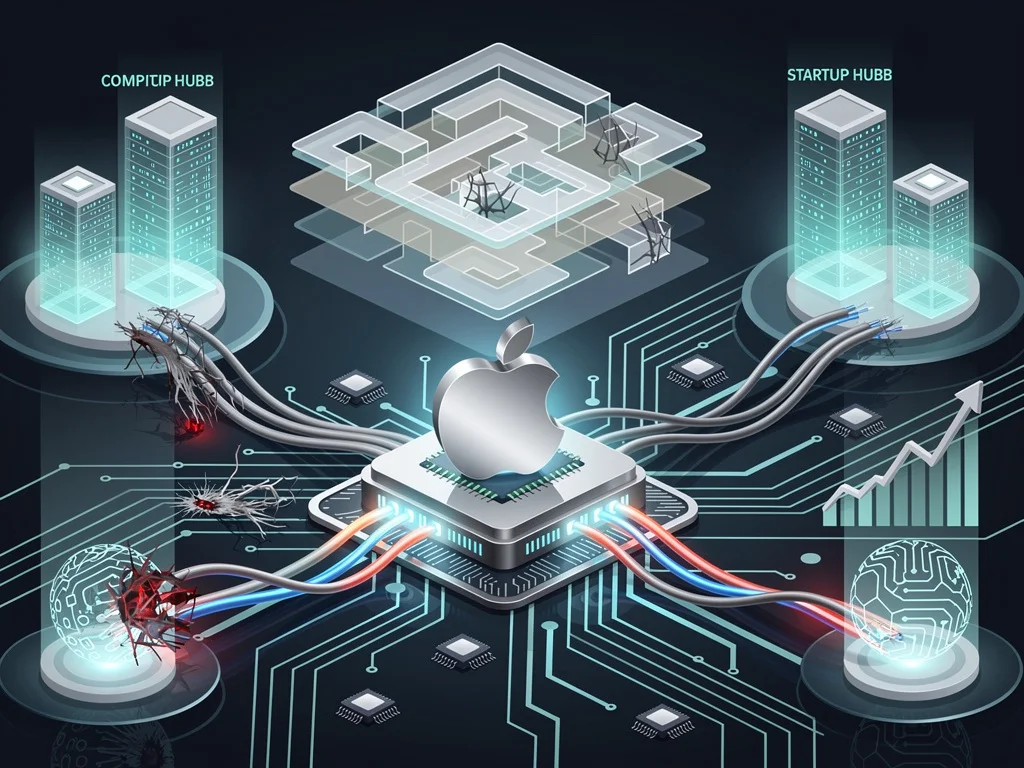
Reports from MacRumors, highlighted by WebProNews, indicate that several key members of Apple’s AI research team have recently transitioned to opportunities at rival tech firms and well-funded startups. This movement of talent is not just standard employee turnover; it suggests deeper systemic issues within Apple's AI strategy and its organizational culture. These issues appear to be hindering the company's ability to retain the highly specialized expertise essential for developing advanced AI systems. The departures are particularly concerning given Apple’s public commitment to integrating AI capabilities across its entire product ecosystem, despite having invested billions in AI research and development.
Financial and Cultural Pressures Driving Departures
A significant factor contributing to this talent drain is financial incentives. AI researchers and engineers command substantial salaries within the current market, with compensation packages at dedicated AI companies frequently surpassing those offered by traditional tech giants like Apple. Venture capital-backed startups have been especially aggressive in their recruitment efforts, often providing not only higher base salaries but also significant equity stakes that could prove highly valuable if their AI technologies succeed commercially. Beyond financial considerations, cultural factors also play a role. Apple's well-known emphasis on product secrecy and its hierarchical organizational structure can be a source of frustration for researchers who are accustomed to the open collaboration and rapid publication cycles prevalent in academic and AI-focused environments. Many AI researchers value the opportunity to publish their findings and contribute to the broader scientific community, activities often restricted by Apple's tight controls over intellectual property, as reported by WebProNews.
Strategic Implications for Apple's AI Rollout and Competitive Landscape
The timing of these departures is particularly detrimental to Apple's AI ambitions. The company has been actively working to expand its Apple Intelligence features, unveiled as part of iOS 18 and macOS Sequoia. These features represent Apple's most significant push into consumer-facing AI, encompassing enhanced Siri functionality, writing assistance tools, and image generation capabilities. Losing experienced researchers during this crucial development phase could lead to delays in feature releases or a compromise in their quality. Apple’s AI strategy hinges on the seamless integration of intelligence into existing products rather than launching standalone AI services. This approach necessitates deep technical expertise across various domains, including natural language processing, computer vision, and on-device optimization. Each researcher departure creates knowledge gaps that can take months or even years to fill, especially given the fiercely competitive hiring landscape for AI talent.
The company also faces mounting pressure from investors and consumers who have become accustomed to rapid AI innovation from competitors. Offerings like Google's Gemini, Microsoft's Copilot integration across Office products, and OpenAI's ChatGPT have set new expectations for AI-powered features. Apple’s more measured approach, while potentially more privacy-conscious, risks being perceived as lagging if the company cannot execute quickly and effectively.
Apple's Adaptations Amidst Industry-Wide Competition
The challenges confronting Apple are reflective of a broader industry-wide dilemma: a scarcity of qualified AI researchers to meet surging demand. Universities produce a limited number of PhD graduates specializing in machine learning and AI annually, and these individuals are highly sought after by numerous companies even before completing their degrees. This imbalance in supply and demand has created a hyper-competitive hiring environment where even marginal advantages in compensation, culture, or project appeal can determine where talent chooses to work, as detailed by WebProNews. To counter this trend, Apple has reportedly begun adjusting its approach to AI research and development. The company has increased compensation for AI specialists and implemented more flexible publication policies, allowing researchers to share certain findings with the broader scientific community. These changes represent significant deviations from Apple's traditional practices, underscoring the seriousness with which leadership views the retention crisis.
Long-Term Implications for Apple's Competitive Stature
The exodus of AI researchers carries implications that extend beyond any single product or feature. As artificial intelligence becomes increasingly central to computing experiences, companies that fail to attract and retain top AI talent risk losing their competitive edge across their entire product portfolio. For Apple, this could translate to falling behind in areas where it has historically excelled, ranging from smartphone photography and voice assistants to augmented reality applications. The situation also prompts questions about Apple’s long-term strategic positioning. The company has built its modern success on vertical integration and controlling its entire technology stack, from silicon to software. However, AI development increasingly relies on vast datasets, cloud infrastructure, and collaborative research – areas where Apple’s traditional strengths may be less impactful than scale and openness. If Apple cannot adapt its organizational culture and development practices to the realities of AI competition, it may find itself licensing technology from competitors rather than developing proprietary capabilities. Financial markets have started to acknowledge Apple’s AI challenges. While the company’s stock remains strong due to its existing business performance, some analysts have expressed concerns about Apple’s ability to sustain its premium valuation if it significantly falls behind in AI capabilities. The technology sector has seen dramatic valuation shifts based on perceived AI leadership, with companies like Nvidia and Microsoft benefiting immensely from their AI positioning, while others have struggled.
Related Articles
Nvidia Accelerates China Strategy with Custom AI Chips and Renewed H200 Exports
Nvidia is developing a Chinese-compatible version of its newly acquired Groq AI chips and resuming H200 processor exports, signaling a critical pivot in its strategy for the lucrative Chinese market amidst US export controls.