Indian deep tech startups are struggling, not from technical shortcomings but ecosystem failures. Market readiness, misaligned capital, and weak procurement pathways are leading to closures across AI, robotics, and climate tech.
India’s ambition to become a global leader in deep technology, spanning artificial intelligence, robotics, climate tech, and advanced manufacturing, is facing a harsh reality check. Despite a burgeoning startup scene and increasing policy attention, a significant number of deep tech ventures are faltering, not due to a lack of innovative technology, but rather an unsupportive surrounding ecosystem. Recent data indicates a concerning trend, with at least 29 Indian deep tech startups shuttering in 2025 alone, encompassing diverse fields from AI infrastructure to energy storage and advanced materials. This wave of failures highlights a fundamental disconnect between India's technological prowess and its capacity to nurture and scale these complex, capital-intensive businesses to sustainable commercial success.
The prevailing narrative when an Indian deep tech startup closes its doors often points to technological deficiencies. However, as articulated by Kushal Bhagia, founder and partner at All In Capital, the reality is far more nuanced and uncomfortable. “Deep tech in India rarely fails because the technology is bad,” Bhagia states. “It fails because the environment around the technology is not ready.” This candid assessment, featured in Analytics India Magazine, underscores a critical structural issue. While government documents and policy initiatives frequently champion innovation in frontier technologies, founders on the ground encounter a gauntlet of challenges. These include protracted sales cycles, a misalignment in capital expectations, underdeveloped procurement pathways, and a pervasive reluctance among potential customers to embrace early-stage solutions. Many startups, even those with technically sound products, simply run out of operational runway before the ecosystem can catch up to their pace of innovation.
The problem isn't a dearth of scientific or engineering talent; it's a systemic resistance to adopting groundbreaking solutions. Enterprises in India are characterized as cautious buyers, demanding extensive proof, seamless integration, robust service support, and continuity before committing to new technologies. This translates into exceedingly long pilot phases, often stretching over six months, during which startups invest significant resources in trials, customization, and securing internal buy-in—all without a secured revenue stream. This "missing middle" phase, as Bhagia terms it, where companies need several years to achieve certifications, gather real-world data, and validate their products, becomes a chasm that many promising deep tech ventures fall into, starving them of crucial resources and leading to premature closure.
The struggles faced by Indian deep tech startups stand in stark contrast to the dynamism observed in other Asian economies, particularly China and South Korea, which are aggressively fostering their advanced technology sectors. While India grapples with internal ecosystem challenges, China's AI landscape, for example, is experiencing an unprecedented boom marked by rapid innovation and substantial investment. Chinese AI startups like Zhipu are not only releasing cutting-edge models such as the GLM-5, featuring enhanced coding capabilities and long-running agent tasks, but are also achieving significant market traction and even public listings, as reported by The Economic Times. Zhipu, alongside rival MiniMax, has seen strong rallies post-IPO, indicative of investor confidence in China's AI sector.
Similarly, South Korea is actively nurturing its deep tech ecosystem through structured government-backed programs. The National Research Council of Science and Technology (NST) and Korea Science & Technology Holdings (KST) have rolled out initiatives like the "Deep Tech Startup Planning Challenge Program," directly supporting researcher-led startups from government-funded institutes. As highlighted by 아시아경제, this program selects preliminary teams in critical areas such as semiconductors, bio, AI, robotics, and energy, providing comprehensive support from idea development to investment matching. This direct engagement and sustained backing from government and research institutions create a more conducive environment for deep tech to flourish, contrasting sharply with the fragmented support observed in India. While Indian deep tech often struggles with market readiness and capital alignment, these other nations demonstrate how strategic, integrated ecosystems can convert scientific breakthroughs into commercial successes.
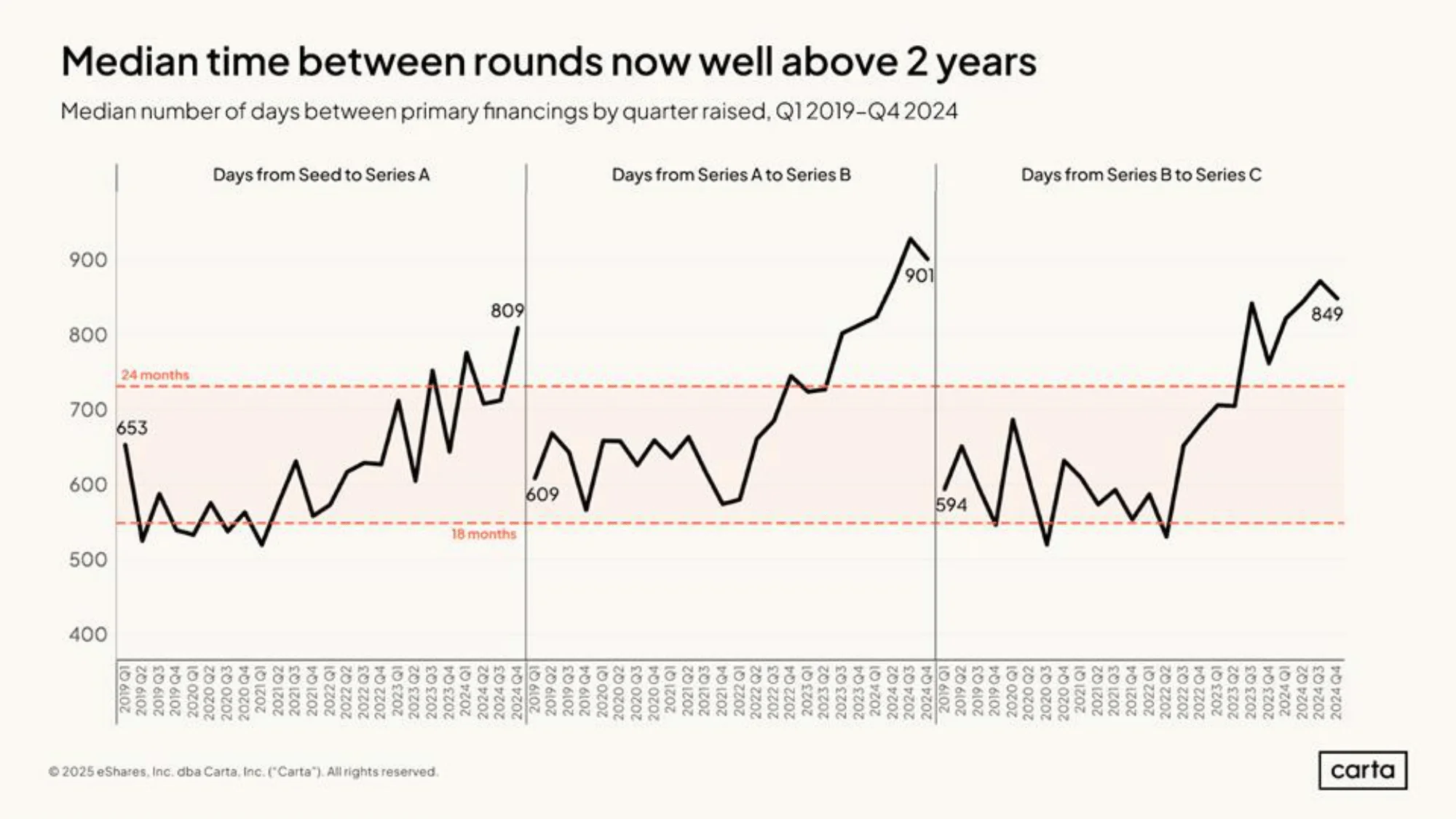
India’s deep tech dilemma is fundamentally a story about the intersection of innovation, capital, and cultural risk appetite. The core issue isn't a deficit of brilliant minds or groundbreaking ideas; rather, it’s the lack of a systemic framework that truly understands and supports the unique lifecycle of deep tech. Unlike traditional software or consumer internet ventures, deep tech requires monumental patience, significant upfront investment in R&D, and an acceptance of longer time horizons for monetization. Indian venture capital, heavily influenced by the fast-paced, high-multiple world of SaaS and e-commerce, currently lacks this fundamental understanding. It demands rapid returns and visible metrics within 18-24 months, a timeframe that is often incompatible with the complex validation and adoption cycles inherent in deep tech.
This creates a perverse incentive structure: founders are pushed to prioritize premature revenue generation over robust product development, leading to products that are rushed to market or heavily customized, rather than scalable. Such short-sightedness not only burns out founders and diminishes investor confidence but also undermines India's potential to become a true deep tech powerhouse. The absence of a "buyer culture" willing to take early risks on innovative solutions is another significant bottleneck. In mature deep tech ecosystems, government contracts and large industrial conglomerates often serve as crucial early adopters, providing essential validation and revenue streams. India’s enterprise procurement processes, however, remain largely risk-averse, viewing innovation as a discretionary add-on rather than a strategic imperative. Until capital and market mindsets evolve to align with the intrinsic nature of deep tech, the current cycle of promising startups failing will unfortunately continue, stunting India's aspirations in critical frontier technologies.
Beyond market readiness, the very nature of capital in India presents a significant hurdle for deep tech. Deep tech demands patience, often years, to mature an idea from concept to commercially viable product. However, as the Analytics India Magazine article thoroughly explains, Indian venture capital is predominantly structured for faster outcomes. Fund cycles are typically shorter, cheque sizes are smaller compared to global counterparts, and investors frequently expect to see tangible revenue within 18 to 24 months. This expectation forces founders building hardware, robotics, or core AI infrastructure—inherently long-gestation businesses—to operate under the immense pressure of demonstrating SaaS-like growth, often compromising the reliability or robustness of their pioneering technology.
This misalignment creates a distortion of incentives. Founders may push products to market before they are fully ready, stretch their teams thin across a multitude of custom deployments, or chase revenue streams that inadvertently mask deeper product weaknesses. When initial pilots fail to convert into repeatable sales and scalable revenue, investor conviction inevitably wanes. “Conviction usually breaks when pilots don’t convert into repeatable revenue,” Bhagia notes. “If every deployment feels custom, if sales cycles don’t shrink, that is a warning sign.” This issue is compounded by the "missing middle stage," a critical gap where startups need sustained capital and support mechanisms post-pilot to secure certifications, gather real-world data, and validate their offerings in demanding industrial environments. Without this crucial bridge, many technically sound companies simply run out of steam and capital, leading to premature shutdowns regardless of their initial promise. The cautionary tale of Glaucus Tech, shared by co-founder Nazim Girach, underscores these financial and market strains, highlighting how even a technically capable venture can succumb to cash flow mismanagement and difficult payment terms from cautious enterprises.
For India to truly realize its deep tech potential, a multi-pronged approach is essential. Firstly, there needs to be a fundamental shift in venture capital mindsets, moving towards longer investment horizons and a greater appreciation for the patient capital required for deep tech. Specialized deep tech funds, potentially with greater participation from institutional investors and government-backed initiatives, could help bridge this gap. Secondly, creating a culture of early adoption among large Indian enterprises and government bodies is critical. This could involve incentivizing early procurement, establishing sandboxes for testing innovative solutions, and developing clear, expedited frameworks for certification and integration. Learning from countries like South Korea, where government-funded research institutes are directly channeling deep tech into startups, could provide a valuable blueprint. Finally, robust mentorship programs focusing on operational aspects like cash flow management, sales cycle optimization, and customer relationship management are vital for first-time founders navigating unpredictable markets. Only through such comprehensive ecosystem building can India convert its vast scientific talent into a thriving, sustainable deep tech economy.
Google and Accel's Atoms accelerator rejected 70% of AI startups as 'wrappers,' highlighting a venture capital pivot towards deep tech and proprietary models over superficial integrations.

Qualcomm Ventures launches a $150M Strategic AI Venture Fund to back Indian AI startups in automotive, robotics, IoT, and mobile sectors, coinciding with India's projected AI market surge to $32B by 2031.

Amidst tech stock declines, AI and robotics ignite massive investment, with OpenAI eyeing an $850B+ valuation and Jeff Bezos backing key innovators.