
OpenAI's API Head of Engineering, Sherwin Wu, predicts AI will usher in a "golden age" for B2B SaaS and software startups, favoring numerous small, high-agency businesses over single billion-dollar entities, fueled by reduced development costs.
In a significant prognostication poised to reshape the global startup ecosystem, OpenAI’s API Head of Engineering, Sherwin Wu, has boldly declared that artificial intelligence will usher in an unprecedented “golden age.” Wu posits that this transformative era will be characterized not by the emergence of a few monolithic, single-person billion-dollar enterprises, but rather by a proliferation of smaller, high-agency B2B SaaS and software startups. His insights, shared during a recent appearance on Lenny's Podcast, suggest a fundamental shift in how businesses are conceived, built, and funded, driven primarily by AI's capacity to dramatically lower the barriers to entry and operational costs for entrepreneurs. This vision paints a future where innovation is democratized, leading to a surge in the overall number of new companies and a re-evaluation of traditional venture capital models, as reported by the Times of India.
The journey to this predicted “golden age” is rooted in the relentless march of technological progress, particularly in artificial intelligence. For decades, the tech industry has seen cyclical trends: from the rise of giant hardware manufacturers to the dominance of software titans and, more recently, the ascendancy of platform behemoths that control vast swathes of digital infrastructure. Cloud computing, in particular, democratized access to powerful infrastructure, enabling startups to scale without prohibitive upfront costs. However, even with cloud infrastructure, the complexity and expense of developing sophisticated software, managing data pipelines, and providing robust customer support remained significant hurdles. The aspiration of a “billion-dollar startup” often implied building a large, complex organization with substantial venture capital backing and an extensive employee base. Wu's prediction suggests that AI is set to further dismantle these remaining barriers, not just making it easier to build, but also fundamentally altering the very definition of a successful, impactful startup. This evolution represents a continuation of the trend toward highly leveraged, efficient operations, pushing the boundaries of what a small team, or even an individual, can achieve with powerful tools at their disposal.
OpenAI’s Sherwin Wu articulates a future where AI acts as a profound equalizer, significantly lowering the cost and effort required to develop and launch products. This accessibility, he argues, will empower a larger cohort of individuals to become entrepreneurs, rather than consolidating power into a few ultra-rich unicorn founders. “It’s hard for me to imagine one person like I’m bearish on this billion-dollar startup,” Wu stated during his podcast appearance, as reported by the Times of India. Instead, he foresees an explosion in the sheer number of startups, particularly within the B2B SaaS and software sectors, marking this period as a “golden age.” This paradigm shift also implies a reordering of the venture capital landscape. Wu predicts a decline in the number of 'venture-scale return' startups – those commanding astronomical valuations – in favor of an increase in smaller, but highly effective, AI-driven businesses. These companies will leverage AI tools to achieve unprecedented efficiency, streamlining operations that once required extensive human capital and financial investment. Wu further elaborated on the inherent difficulties of scaling a billion-dollar enterprise, specifically highlighting the exorbitant costs associated with customer support, an area where AI promises significant automation and cost reduction. He posits that future startups may excel by focusing on niche support software for specific industries or use cases, thereby enabling a broader ecosystem of specialized AI-powered solutions. This vision aligns with recent developments in the AI space, such as the growth of embodied AI, exemplified by companies like Qianjue Technology. As reported by Pandaily, Qianjue, founded in 2023, recently secured nearly RMB 100 million ($13.9M) in a Pre-A++ extension round, signaling significant investment in AI solutions that operate autonomously in the physical world. While Qianjue Tech focuses on full-size robots for household and restaurant settings, its rapid growth and focus on autonomous perception-decision-action loops underscore the broader trend of AI enabling sophisticated applications with reduced human intervention, a core tenet of Wu's “golden age” prediction.
Sherwin Wu’s perspective offers a compelling counter-narrative to the conventional Silicon Valley obsession with 'unicorns' and mega-startups. His emphasis on a "golden age" for smaller, high-agency AI-driven businesses suggests a move towards a more resilient and diverse entrepreneurial landscape. This shift has profound implications for venture capitalists, entrepreneurs, and even traditional corporations. For VCs, it signals a potential need to reassess investment strategies, perhaps favoring a higher volume of smaller investments in profitable, albeit not necessarily billion-dollar, ventures. The traditional 'power law' distribution of VC returns, where a few massive successes offset many failures, might evolve in this new environment. For entrepreneurs, the playing field appears to be flattening. The prohibitive costs of engineering, customer support, and general operations, which often deter nascent founders, are being actively addressed by AI. This could foster immense creativity, allowing individuals or small teams to tackle specialized problems with highly tailored AI solutions, rather than being forced to chase broad-market appeals to justify massive valuations. This also means increased competition. If building a startup becomes significantly easier, the market will likely be flooded with new entrants, demanding greater differentiation and efficiency to stand out. From a broader economic perspective, a proliferation of specialized B2B software and services, fueled by AI, could lead to widespread productivity gains across various industries, transcending the tech sector. Enterprises, regardless of size, could leverage these AI-powered tools to optimize operations, reduce costs, and innovate faster, creating a virtuous cycle of technological adoption and economic growth. This democratized innovation, however, also brings challenges related to market saturation, intellectual property protection in an AI-assisted development world, and the ethical deployment of these powerful tools across an unprecedented number of new ventures.
Wu's insights into the challenges of scaling billion-dollar startups, particularly concerning customer support, highlight a critical pain point that AI is uniquely positioned to address. The human-intensive nature of customer service often becomes a bottleneck for rapidly growing companies, leading to escalating costs and potential service degradation. AI-powered solutions, ranging from sophisticated chatbots to automated troubleshooting systems and predictive analytics for proactive problem-solving, can dramatically reduce this overhead. This directly enables the viability of smaller startups focusing on niche solutions without being overwhelmed by support demands from day one. The Times of India notes that Wu sees this leading to a growth in smaller startups focused on building support software for specific industries or use cases. This specialization is a key differentiator in a crowded market. For example, rather than a generic CRM, an AI-driven startup might offer a bespoke customer support platform specifically for agricultural tech companies, learning and adapting to their unique terminology and challenges. Such targeted solutions, made efficient by AI, become highly valuable to their specific clientele. Moreover, the emergence of companies like Qianjue Technology, as reported by Pandaily, provides a tangible example of AI’s expansive reach beyond purely software-based solutions. Qianjue’s focus on embodied world models and brain-inspired computing to enable autonomous robots for tasks like cleaning, serving, and eldercare illustrates how AI can directly augment the physical world workforce. Their ability to secure a nearly RMB 100 million Pre-A++ extension round shortly after being founded in 2023, with plans to deploy 100,000 connected devices by year-end 2026, showcases the speed and scale at which AI-driven ventures are attracting significant investment and realizing commercial potential. This company's innovative use of pure-vision spatial understanding, effectively replacing traditional LiDAR with visual perception, further underscores the creative problem-solving enabled by advanced AI techniques, contributing to the overall narrative of lower-cost, high-impact innovation championed by Wu.
The “golden age” predicted by Sherwin Wu presents a future where the entrepreneurial spirit is unburdened by traditionally massive overheads, leading to a vibrant and diverse startup landscape. This trajectory will compel venture capital firms to re-evaluate their investment theses, potentially prioritizing sustainable growth and specialized impact over chasing unicorn valuations. Entrepreneurs, in turn, will be empowered to pursue niche markets and complex problems with unprecedented efficiency, fostering a new wave of innovation. Beyond B2B SaaS, this trend could ripple into other sectors where embodied AI, like that developed by Qianjue Technology, revolutionizes physical tasks and service industries. As AI tools become even more sophisticated and ubiquitous, the distinction between a 'product' and an 'AI agent' might blur, leading to entirely new business models. Key challenges will include navigating the ethical implications of widespread AI deployment, ensuring equitable access to these powerful tools, and managing the potential for market saturation in popular niche areas. The next few years will be crucial in observing whether this vision of a democratized, AI-powered entrepreneurial ecosystem fully materializes, fundamentally altering the global economic and technological fabric.

Disgraced AI startup Cluely, founded by Roy Lee, highlights a disturbing trend in Silicon Valley's AI gold rush, battling public scorn and VC recalibration.
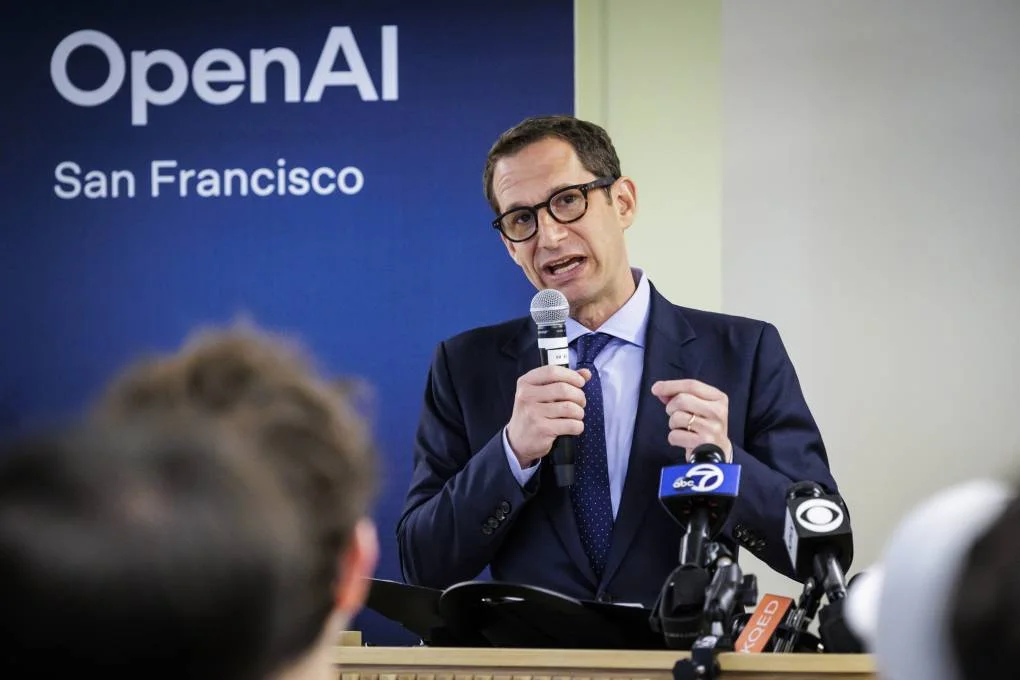
A deep dive into San Francisco's bizarre AI startup landscape, the rise and fall of "cheating tool" Cluely, and how VCs are reassessing AI SaaS investments.
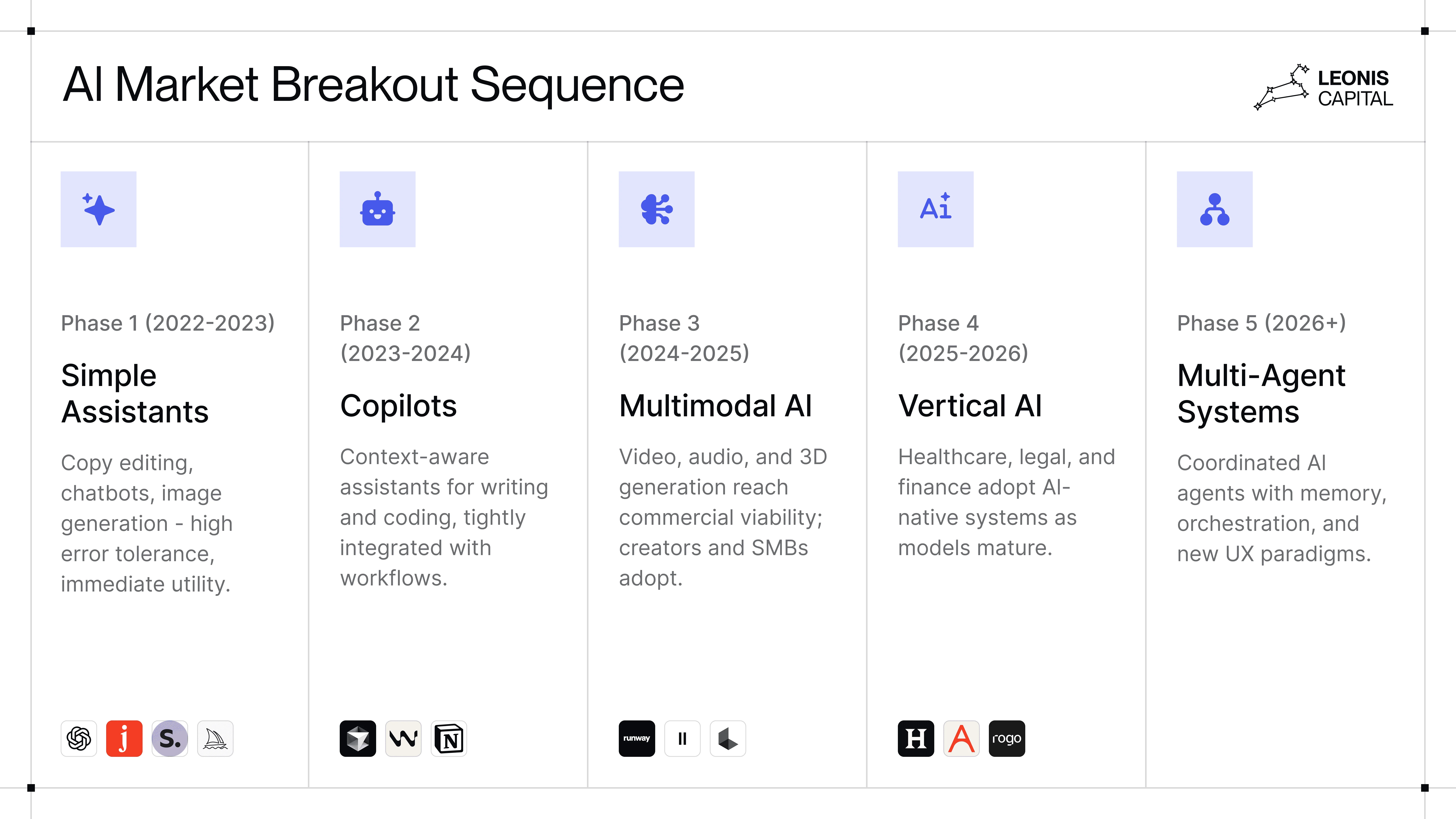
Leonis Capital's founders Jenny Xiao and Jay Zhao reveal their top questions for evaluating AI startups, focusing on technical depth, defensibility, and founder insight.