Bollywood star Alia Bhatt's embrace of ancient Taoist parenting philosophy highlights a growing shift towards intentional, slower, and less controlling approaches in modern family life amidst demanding careers.
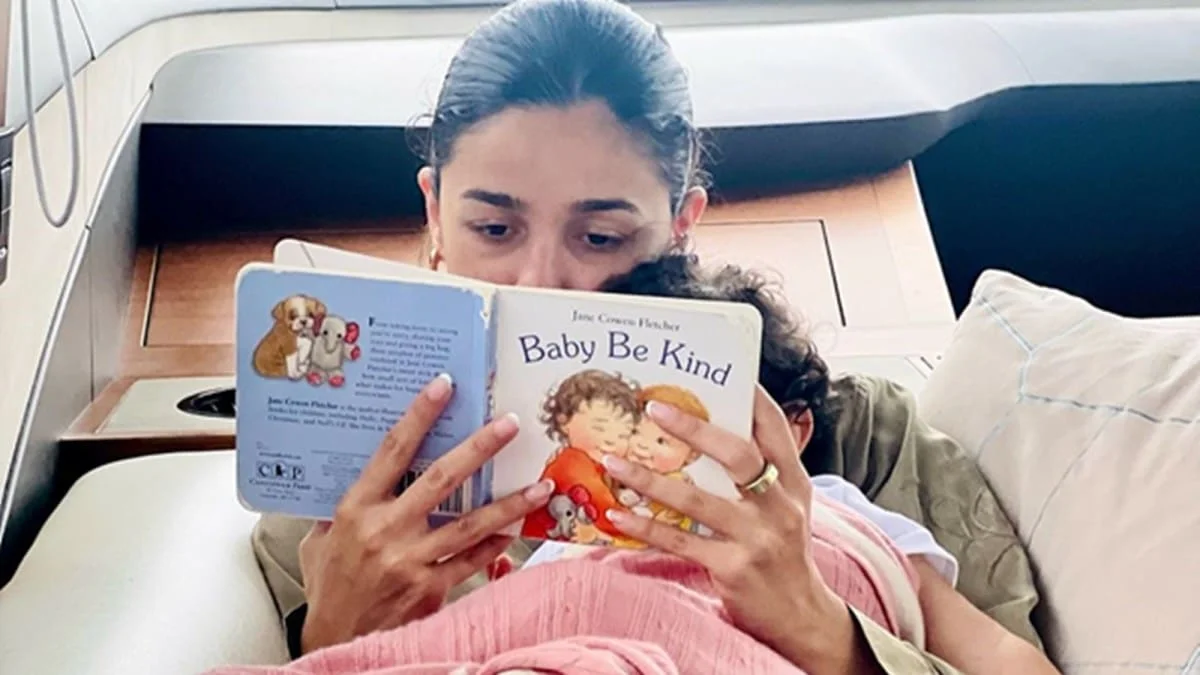
In an era dominated by fleeting social media trends and the relentless pace of celebrity life, Bollywood A-lister Alia Bhatt has unveiled an unexpected “obsession” that is resonating far beyond typical viral content: a book on Taoist parenting. Her recent Instagram post, stark in its simplicity – a single word caption, “Obsessed,” accompanying a picture of William Martin’s ‘The Parent’s Tao Te Ching’ – has ignited conversations about intentional parenting, work-life balance, and the timeless wisdom many modern families seek amidst the clamor. This seemingly small gesture by one of India's most prominent actresses, known for her demanding film commitments and entrepreneurial ventures, offers a profound glimpse into a personal philosophy that prioritizes deep connection, intuitive guidance, and a slower, more mindful approach to raising her daughter, Raha.
Alia Bhatt’s public endorsement of ‘The Parent’s Tao Te Ching’ fundamentally shifts the spotlight from superficial parenting fads to a deeper, philosophical engagement with child-rearing. As highlighted by Times of India, this choice reflects a conscious pivot towards ancient wisdom in a world saturated with instant expert advice. The book, rooted in Taoist principles, advocates for parents to slow down, practice deep listening, and guide their children with a gentle hand rather than through stringent control. This philosophy stands in stark contrast to the often-prescriptive, anxiety-inducing advice found across digital platforms, promoting a calm presence over constant pressure. For a celebrity like Bhatt, whose life is inherently fast-paced and under public scrutiny, embracing such principles underscores a deliberate effort to create an emotionally rich and stable environment for her family, mirroring a growing sentiment among new-age parents who seek meaningful connections over strict discipline.
The Tao Te Ching, from which Martin’s modern adaptation draws, is an ancient Chinese classic text traditionally credited to the sage Laozi (Lao Tzu) and is a foundational text of Taoism. Its core tenets emphasize living in harmony with the ‘Tao’ – the natural order of the universe – advocating for simplicity, spontaneity, and a certain 'wu wei' or "non-action" in governance and personal conduct. Translating these profound philosophical concepts to parenting involves fostering a child's natural growth without imposing rigid structures or expectations, much like allowing a river to find its own course. This historical context imbues Bhatt's choice with significant depth, suggesting a search for enduring truths rather than fleeting trends in the monumental task of raising a child.
The dedication Alia Bhatt demonstrates to her parenting journey, even amidst a burgeoning career, offers significant insights for working parents everywhere. The Times of India report emphasizes her rigorous schedule, which includes filming high-profile projects like ‘Love & War’ with Sanjay Leela Bhansali and the spy thriller ‘Alpha,’ alongside her roles as producer under Eternal Sunshine Productions. Despite these demanding commitments, her investment in reading about motherhood signifies that parenting is not an innate skill, even for those with extensive resources, but rather a learned, studied, and continuously refined practice. This resonates powerfully with countless working mothers and fathers who grapple with the challenge of balancing professional ambition with the desire to be deeply involved in their children's lives. Bhatt’s visible effort to protect her daughter Raha's privacy and childhood, mentioned in earlier interviews, coupled with her acknowledgment of how motherhood has reshaped her priorities, provides a quiet reassurance that it is possible to chase career goals while remaining profoundly present at home. This requires meticulous planning, unwavering intention, and a constant commitment to personal growth – a reality for many, not just celebrities.
Her public expression of "obsession" with a philosophical parenting guide also highlights a growing trend among public figures to share more authentic, less curated aspects of their personal development. While some viral content might revolve around easily digestible, often fleeting, entertainment – such as the viral video of a man sketching an air hostess, praised for its wholesome interaction – Bhatt's choice leans towards substantive self-improvement and thoughtful engagement with deep existential questions pertinent to family life. This differentiation underscores a pivot from passive consumption of trending content to active engagement with meaningful philosophies, signaling a desire for depth and personal enrichment that supersedes superficial virality. It suggests a conscious move to align personal values with public influence, using her platform to inspire thoughtful rather than impulsive engagement.
Alia Bhatt’s public embrace of Taoist parenting is more than a celebrity endorsement; it signals a potential paradigm shift in how modern society, particularly in demanding professional spheres, defines successful parenting. In a culture often obsessed with milestones, hyper-scheduling, and outwardly visible achievements—both for parents and children—the Taoist philosophy champions a radical slowing down and an emphasis on emotional availability over constant physical presence. This challenges the pervasive "hustle culture" narrative that often implicitly devalues the intangible rewards of mindful, present parenting. For working parents, the message is profoundly reassuring: career ambition and deep parental involvement are not mutually exclusive but can coexist harmonously, provided there is intention and a genuine commitment to learning and adapting. This approach moves beyond the simplistic "work-life balance" rhetoric to a more integrated understanding of self, career, and family as interlinked domains requiring continuous reflection and growth.
Furthermore, this development highlights the critical role of partnership in modern parenting, a concept Alia and Ranbir Kapoor appear to embody. The Times of India article notes Ranbir's commentary on how fatherhood has made him more emotionally open, complementing Alia's commitment to creating a secure environment for Raha. This shared responsibility is crucial, fostering emotional stability for children and providing them with varied perspectives. It also implicitly counters the societal pressure often placed disproportionately on mothers for childcare, demonstrating a collaborative model that values consistent presence and shared emotional investment over who "does more." This partnership aspect is vital in debunking the myth that intense professional careers necessitate absentee parenting, instead advocating for purposeful, conscious engagement from both parents, setting a powerful example for families navigating similar contemporary challenges.
The choice to delve into a philosophy-based book rather than a quick-fix guide can also be seen as an antidote to the prevalent dangers of quick, unverified information spreading online, a phenomenon tragically exemplified by scams like the 'Angel Nuzhat' viral MMS, as reported by Zee News. While the 'Angel Nuzhat' scandal exploits public curiosity through fabricated, specific-duration videos to distribute malware, Alia's engagement with Taoism represents the opposite end of the spectrum: a pursuit of genuine, deep wisdom rather than ephemeral, potentially harmful digital noise. This contrast underscores a broader societal challenge – discerning valuable, enriching content from deceptive or superficial virality, particularly when it comes to guiding fundamental life choices like parenting. Bhatt’s deliberate, reflective approach stands as a beacon for intentional engagement over passive consumption.
Alia Bhatt's declaration of being "obsessed" with ‘The Parent’s Tao Te Ching’ subtly conveys a powerful message about the role of curiosity in effective parenting. As detailed by Times of India, this curiosity is crucial because it fosters an open mind, enables continuous learning, and allows parents to adapt their approach as their child grows. Rather than relying on rigid rules, the Taoist philosophy encourages parents to guide their children, nurturing an environment where they can develop naturally and confidently. This mindset inherently reduces power struggles and creates space for children to explore their individuality without feeling unduly controlled. In a society that often pressures parents to measure every milestone and push for early achievements, the concept of "slowing down" is indeed radical. This deliberate pace allows both parent and child to grow organically, challenging the prevailing notion that faster is always better in child development.
The Taoist principle of "wu wei," often translated as "non-action" or "effortless action," is particularly pertinent here. It doesn't mean doing nothing, but rather acting in harmony with the natural flow of things, without force or interference. Applied to parenting, this translates into observing a child's inherent nature, providing support and opportunities, and stepping back to allow them to learn from their own experiences. This approach contrasts sharply with "helicopter parenting" or "tiger parenting" styles that often stem from anxiety and a desire for control. Bhatt’s endorsement of this philosophy suggests a profound understanding that true growth, both for the child and the parent, comes from a place of trust and unconditional support, rather than constant management and external validation. It's a call to embrace the journey of parenting with presence and patience, accepting imperfections and celebrating individual paths, a stark departure from the often-pressured, performative aspects of modern parenthood.
Alia Bhatt's foray into Taoist parenting foreshadows a broader cultural shift towards more thoughtful and intentional approaches to family life, especially among high-achieving individuals. While not every parent will embrace ancient Chinese philosophy, her public example underscores the universal truth that love is innate, but parenting skills are cultivated. The long-term implications suggest a growing recognition that personal growth for parents is as vital as the development of their children. This movement towards introspection and philosophical grounding offers a powerful counter-narrative to the fleeting, often superficial trends that dominate digital discourse, inspiring parents to seek deeper meaning and connection.
The emphasis on building meaningful conversations, protecting a child's privacy, and fostering strong parental partnerships are not glamorous acts but cornerstone components of a resilient family unit. In an unpredictable world, these quiet, daily commitments form the bedrock of emotional stability and personal fulfillment, enduring long after fleeting fame or viral moments fade. What Alia Bhatt's "obsession" ultimately teaches us is that true impact in parenting comes from conscious effort, continuous learning, and an unwavering commitment to nurturing growth, both within oneself and one's family.