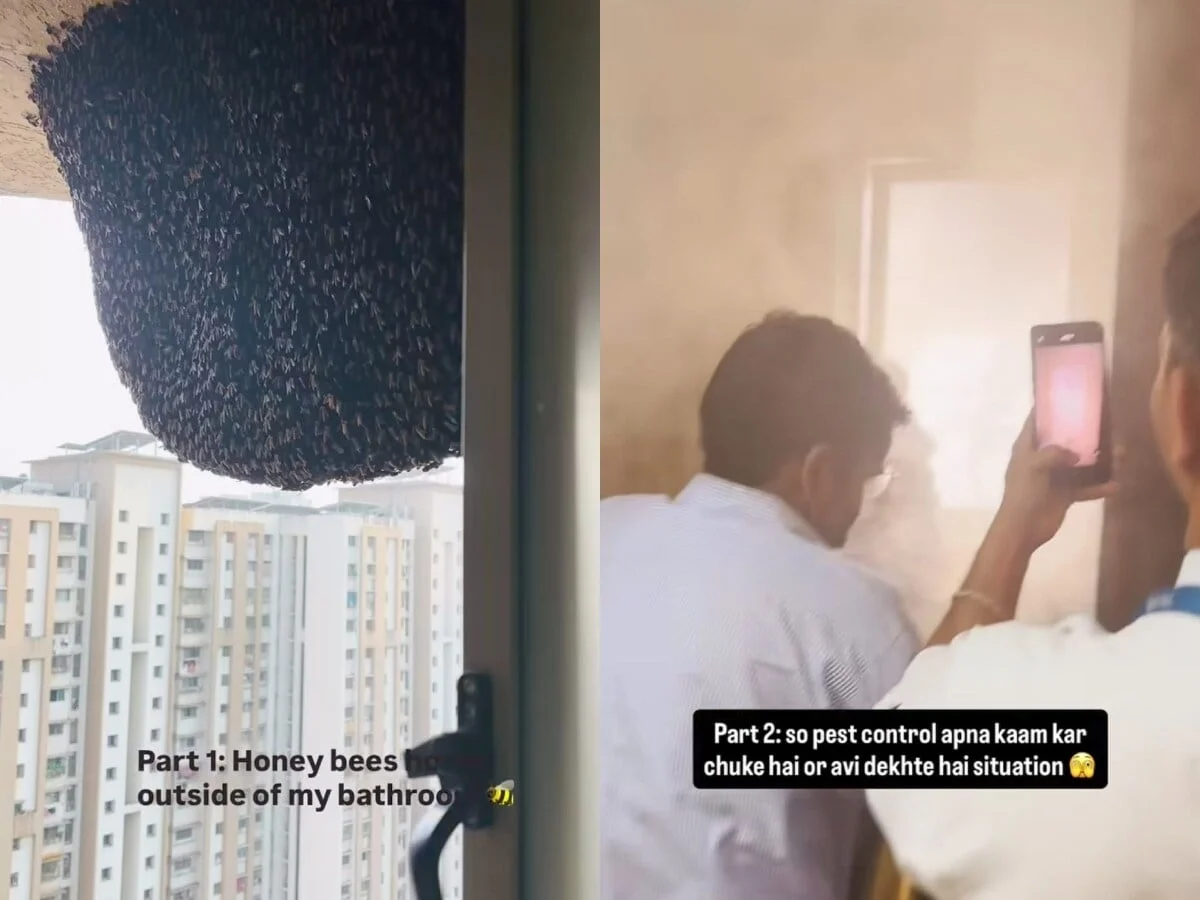
Mumbai Woman's Viral Beehive Removal Sparks Outcry Over 'Unnecessary Bee Deaths' on 31st Floor
A Mumbai resident's live commentary of a 31st-floor beehive removal goes viral, igniting a debate about humane pest control and environmental responsibility amid concerns of bee deaths.

In a compelling example of how social media can rapidly amplify local events into global debates, a Mumbai resident's video documenting the removal of a beehive from outside her 31st-floor apartment has gone viral, sparking widespread outrage and igniting crucial conversations about environmental responsibility and humane pest control methods. Ruma S Bhowmik's live commentary, shared across platforms, captured the entire operation by pest control workers, leading to a strong backlash from viewers who criticized the methods employed, citing "unnecessary bee deaths" and advocating for more eco-friendly alternatives. The incident, as reported by Hindustan Times, underscores a growing public awareness and concern for pollinators and the impact of human intervention on their populations.
Background and Context of Urban Wildlife Encounters
The proliferation of human habitats into natural environments, particularly in densely populated urban centers like Mumbai, inevitably leads to increased interactions between humans and wildlife. Bees, vital pollinators crucial for ecosystem health and agricultural productivity, often find suitable nesting sites in high-rise buildings, posing a perceived "nuisance" or "hazard" to residents. Historically, the immediate response to such encounters has often involved eradication through chemical pesticides or destructive removal methods. However, in recent years, there has been a significant shift in public perception, fueled by growing awareness about ecological crises like Colony Collapse Disorder and the importance of bees to global food security. Environmental advocacy groups and scientific research have highlighted the dramatic decline in bee populations worldwide, leading to a more informed and vocal public demanding ethical and sustainable solutions for wildlife management, even in urban settings. This incident perfectly illustrates the tension between urban living convenience and ecological preservation, a challenge many global cities grapple with, often without clear, universally adopted guidelines for humane wildlife relocation.
Live Commentary and Viral Outcry
The incident unfolded from the perspective of Mumbai resident Ruma S Bhowmik, who filmed the entire beehive removal process from her 31st-floor bathroom window. Her raw, unfiltered video, providing a running commentary on the pest control workers' actions, quickly captivated over 2 million viewers online, as detailed by Hindustan Times. The initial video showed the operation in progress, with Bhowmik expressing her observations. A subsequent video, posted after the removal, confirmed the beehive's absence but also tragically revealed "a few dead bees lying nearby." This visual evidence of casualties struck a chord with the online community, prompting an immediate and strong reaction. While some pragmatic comments questioned the need for intervention or urged the workers to be allowed to do their job, the overwhelming sentiment was one of condemnation for the methods used. Users were quick to point out the perceived brutality of using chemical sprays in conjunction with smoke, arguing that such an approach leads to "unnecessary bee deaths." Many also suggested that the pest control company's methods were outdated and harmful, advocating instead for the involvement of professional beekeepers who could perform "live hive removal and relocation without chemicals," describing it as "safer, effective long term, and environmentally responsible." The comments section became a forum for passionate debate, with many users echoing the sentiment that "Bees are the reason this planet is green," underscoring the deep ecological concern shared by a significant portion of the internet audience. The criticism was not just about the specific incident but a broader call for more humane and environmentally conscious practices in managing urban wildlife, particularly pollinators.
Analysis: The Ethics of Urban Pest Control and Public Awareness
This viral incident transcends a simple video of beehive removal; it serves as a powerful mirror reflecting evolving societal values concerning environmental stewardship and the ethics of urban wildlife management. The public's immediate and fervent reaction online—criticizing "unnecessary bee deaths" and advocating for expert beekeeper involvement—highlights a significant shift in environmental consciousness, particularly concerning pollinators. For years, pest control was largely viewed through a utilitarian lens: remove the "nuisance" by any means necessary. However, as awareness of biodiversity loss, climate change, and the critical role of species like bees has permeated public discourse, passive acceptance of destructive methods is waning. The internet's instantaneous and collective outrage indicates a demand for more humane, sustainable, and ecologically informed solutions. This event forces pest control companies, property management, and urban planners to re-evaluate their standard operating procedures. The "industry implication" is clear: companies sticking to chemical-heavy, indiscriminate removal practices risk not only public condemnation but also potential loss of business to those offering more ethical alternatives. For readers and stakeholders, this viral moment is a call to action. It underscores the power of individual observation and collective digital voice to effect change. It suggests that consumers are increasingly willing to choose services that align with their environmental values, and societies must adapt to meet these evolving ethical expectations in how we coexist with wildlife, even within our concrete jungles. The demand for beekeepers to relocate hives, rather than eradicate them, points towards a future where urban development must integrate with ecological preservation, rather than simply dominating it.
Additional Details: Online Reactions Beyond the Beehive
While the beehive video dominated discussions around environmental consciousness, the broader trend of viral online content often sees unrelated narratives intersecting and reflecting public sentiment on various fronts. Interestingly, while Bhowmik's video sparked a debate about ecological responsibility, other trending topics reported by India Today and Hindustan Times concurrently showcase the internet's role in amplifying human emotions, from humor to frustration. For instance, the Delhi Police leveraged a cricket match outcome—India's dominant 61-run win over Pakistan in a T20 World Cup clash—to deliver a witty "U-turn" joke that instantly went viral. Their humorous, traffic-themed jibe, "If you take a U-turn at the wrong place, you’ll end up crashing like this," demonstrated how public institutions are engaging with online trends and leveraging topical events for broader public engagement. This lighthearted social media banter stands in stark contrast to the serious ecological message conveyed by the beehive removal video. In another example of viral content stemming from the same cricket match, a heartbroken Pakistani fan's video of smashing his television in frustration after his team’s loss also gained significant traction. Waqar Azam's act, captioned "India defeated Pakistan again, and I just broke my TV in frustration," showcased the raw, intense emotions that global sporting events can evoke. These diverse viral trends—ecological advocacy, clever institutional humor, and candid emotional outbursts—collectively illustrate the multifaceted nature of online commentary and how a single platform can host a wide spectrum of human experiences and opinions, sometimes simultaneously reaching millions of viewers.
Looking Ahead: The Future of Responsible Urban Wildlife Management
The public outcry following the Mumbai beehive removal serves as a powerful indicator for the future direction of urban pest control and wildlife management. It is no longer sufficient for service providers to merely remove or eradicate; they must now increasingly consider the ethical and environmental implications of their actions. This incident is likely to accelerate the demand for certified, humane, and eco-friendly wildlife relocation services, particularly for species as vital as bees. Property management bodies, residential societies, and even individual homeowners will likely face increased scrutiny and pressure to choose methods that prioritize the well-being of animals and the environment. This could lead to a proliferation of specialized beekeeping services focused on live hive transfers, and potentially, new regulations or best practices being adopted by municipal bodies to govern how such situations are handled in densely populated areas. The viral nature of Bhowmik’s footage ensures that this discussion isn't just a fleeting moment but a lasting testament to a growing collective conscience, pushing for a more harmonious coexistence between urban development and the natural world.
Related Articles

The Nihilist Penguin: Mumbaikars and Experts Dissect Viral Video's Enduring Mystery
A decades-old Werner Herzog clip of a penguin walking alone gains new life online, sparking debate among Mumbaikars and experts about meaning, mental health, and social media's influence.