German Leader Chastises Trump at Munich Security Conference Amid Transatlantic Strains
Chancellor Friedrich Merz criticizes Trump's foreign policy and challenges to global order at Munich Security Conference, calling for allied unity.

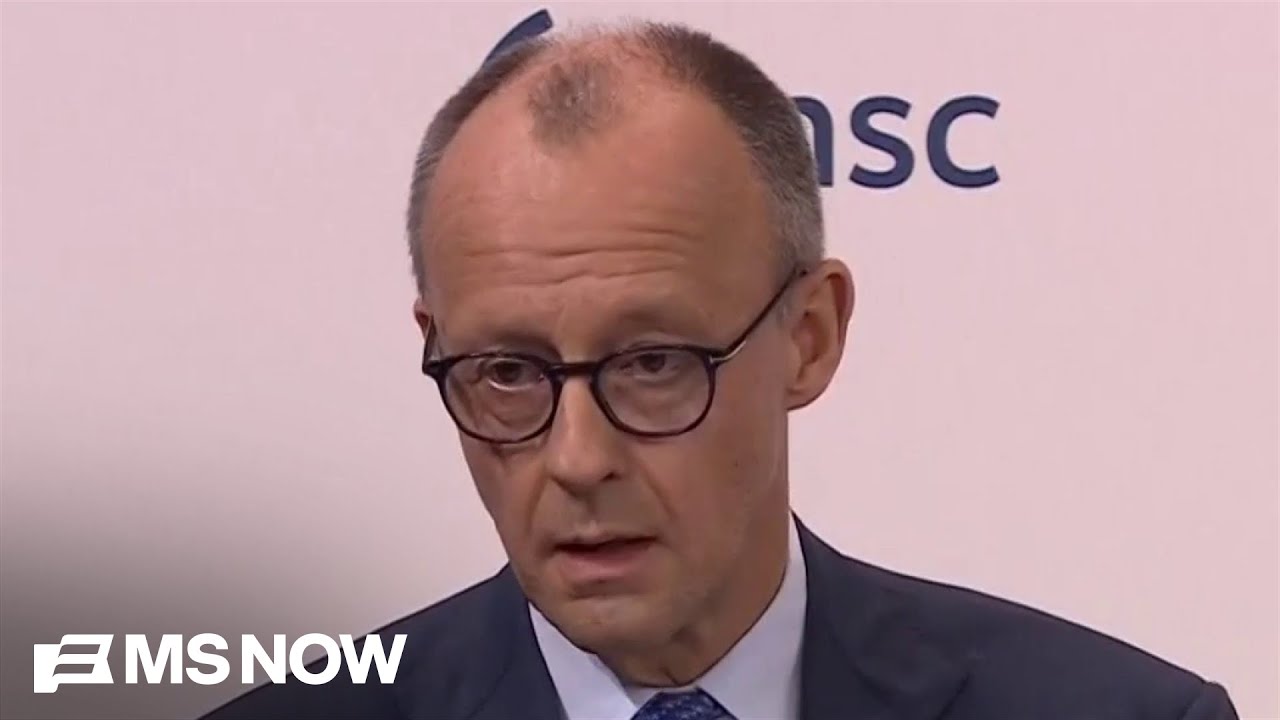
'Repair and revive' transatlantic trust: German chancellor criticizes Trump at Munich conference
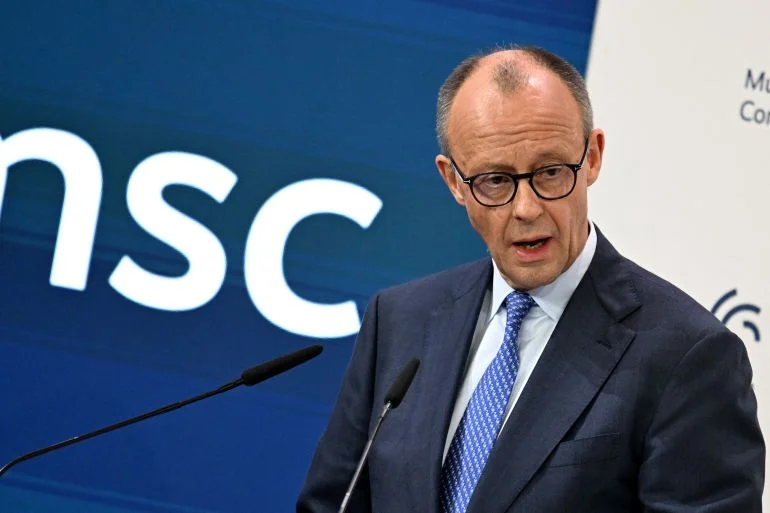
MUNICH – German Chancellor Friedrich Merz delivered a scathing critique of former U.S. President Donald Trump's foreign policy approach at the opening of Europe’s largest annual security conference in Munich today, declaring that the “rules-based international order had collapsed.” Merz’s remarks, made at a critical juncture for continental stability and transatlantic relations, underscored a profound European anxiety regarding American leadership and its commitment to established alliances. Despite his strong words on the erosion of global norms, Merz also extended an olive branch, switching to English to address Americans as “friends” and emphasizing that even the United States cannot “go it alone” in the era of great power rivalry. This dual message reflects Europe’s deep frustration with Trump-era diplomacy while simultaneously signaling a cautious hope for mending strained ties and rebuilding a more constructive partnership [The New York Times].
Erosion of the Global Order and European Discontent
Chancellor Merz's assertion that "The international order based on rights and rules is currently being destroyed" struck a chord with many attendees, reflecting a widespread sentiment across Europe that the foundations of post-World War II global governance have been significantly weakened. He acknowledged that this order, "as flawed as it has been even in its heyday, no longer exists in that form." This sentiment is particularly acute given the sustained "blunt-force diplomacy" of the Trump administration, which has left Europe reeling and uncertain about the future of its alliances [The New York Times]. Merz directly attributed the challenge to America's claim of global leadership to the Trump administration's actions over the past year, suggesting that this leadership "has been challenged, and possibly squandered." This perspective highlights the deep skepticism that has taken root in European capitals regarding the reliability and consistency of American foreign policy, especially concerning multilateral institutions like NATO, which Trump frequently criticized.
The conference chairman, Wolfgang Ischinger, echoed this concern in his opening remarks, expressing hope that the event would foster a "constructive trans-Atlantic reset." However, he also posed a fundamental question that encapsulates Europe's unease: "does the Trump administration believe, truly believe, that it needs allies and partners?" and, if so, "is Washington actually prepared to treat allies as partners?" This inquiry pinpoints the core of the transatlantic dilemma: a perceived shift in Washington's strategic priorities from shared values to transactional interests. The absence of both Trump and Vice President JD Vance, whose aggressive speech at last year's conference castigating European migration policies shocked attendees, signals a potentially different dynamic, though the underlying anxieties remain palpable [The New York Times].
Navigating a "New Era of Geopolitics"
The overarching theme emerging from Munich is the recognition that the world has entered a "new era of geopolitics," as described by U.S. Secretary of State Marco Rubio. Speaking before his departure for the conference, Rubio declared, "The Old World is gone, frankly, the world I grew up in," underscoring the profound transformation in international relations. He emphasized that this new era necessitates a re-examination of roles and approaches for all global actors [The Independent]. This perspective aligns with remarks from Elbridge Colby, the U.S. Under Secretary of Defense for Policy, who suggested that 2025 was intended to "reframe" and "reorient" the trans-Atlantic relationship. Colby articulated a shift from an alliance based on shared values in the post-Cold War era to one grounded in "shared interests," stating pointedly, "You can’t base an alliance on sentiment alone" [The New York Times].
This reorientation has significant implications for long-standing partnerships, particularly NATO. While Merz insisted that Europe and the U.S. needed to continue working together through the alliance, his simultaneous critique of Europe for not bolstering its own security and economic independence suggests a growing European recognition of the need for strategic autonomy. The cancellation of the House delegation to Munich by Speaker Mike Johnson, amidst a domestic funding battle, further exacerbated concerns about American reliability and seriousness in trans-Atlantic relations, prompting strong condemnation from top Democrats who viewed it as detrimental in a moment of strained ties [The New York Times]. Such actions inadvertently reinforce the European push for greater self-sufficiency in defense and foreign policy, a trend that may reshape global power dynamics for decades to come, as nations and alliances grapple with a more transactional approach to international partnerships.
Analysis: The Shifting Sands of Transatlantic Alliance
The discussions at the Munich Security Conference reveal a transatlantic relationship at a pivotal crossroads, grappling with the profound ideological and strategic divergences exacerbated by the Trump administration. Chancellor Merz's speech, a careful balance of criticism and conciliation, encapsulates the core European dilemma: how to safeguard vital alliances and democratic values in an international landscape increasingly shaped by transactional diplomacy and the challenge to multilateralism. His acknowledgment that the "rules-based international order" has collapsed is not merely a lament but a stark recognition of a new operating reality, one where established norms are no longer universally respected or enforced. This shift places a greater onus on individual nations and regional blocs, like the EU, to define and pursue their interests, potentially accelerating moves towards greater Europeanstrategic autonomy.
The American perspective, articulated by Secretary Rubio and Under Secretary Colby, signals a pragmatic, interest-driven approach to alliances, moving away from what they perceive as the "sentiment" of post-Cold War collaboration. While this may offer a clear-eyed assessment of geopolitical realities, it also risks alienating allies who prioritize shared democratic values and a collective defense against authoritarian challenges. The implicit suggestion that previous alliances were based too heavily on emotion rather than concrete advantage could be interpreted by European partners as a dismissal of their contributions and shared history. This divergence in framing — Europe emphasizing shared values and the erosion of a normative order, the U.S. emphasizing a transition to interest-based partnerships — highlights the deep fault lines that must be navigated to forge a truly effective and sustainable transatlantic bond in this complex new era.
Additional Voices on Trump and the Future
Beyond the formal addresses, other prominent American figures at Munich offered contrasting views on the current U.S. administration. California Governor Gavin Newsom, a potential 2028 presidential candidate, reassured Europeans that California remained a steadfast ally despite federal policy shifts. In a blunt assessment, Newsom stated, "Donald Trump is temporary — he’ll be gone in three years," and emphasized that "California is a stable and reliable partner in this space." He further underscored his stance on the main stage by declaring, "Never in the history of the United States of America has there been a more destructive president than the current occupant in the White House in Washington, DC," and asserted that Trump is "doubling down on stupid" and "trying to recreate the 19th century" [The Independent].
Even Senator Chris Murphy, a Democrat from Connecticut, singled out President Trump during a town hall on the future of Gaza, expressing concern about cronyism in reconstruction efforts. He warned that any request for substantial Congressional funding for Gaza would require administration through a transparent forum to avoid "favors being doled out to the president’s friends" [The New York Times]. Meanwhile, Representative Alexandria Ocasio-Cortez participated in a panel discussion on the rise of populism, advocating for a "working-class centered politics" to address economic instability and "stave off the scourges of authoritarianism," offering a progressive counter-narrative to Trump's policies. While she avoided discussing her own presidential ambitions, her presence and message presented a distinct contrast to the prevailing anxieties about the current U.S. foreign policy direction [The New York Times]. These diverse American voices at the conference signal the internal struggle within the U.S. regarding its global role and underscore the potential for future shifts in its international posture, offering a glimmer of hope for some European leaders amidst their current concerns.
Glimpses of Hope and Ongoing Challenges
Despite the prevailing anxieties, there are efforts to find common ground and address pressing global issues. Secretary Rubio, despite a packed schedule that prevented his attendance at the "Berlin Format" meeting on the Ukraine war, is actively discussing the conflict in other engagements, signaling continued U.S. attention to the crisis [The New York Times]. Indeed, the critical importance of Ukraine's defense was highlighted by the announcement that Ukraine will receive $38 billion in military aid from allies in 2026, including £500 million for air defense from the UK as part of a larger £3 billion support package [The Independent]. Ukraine's Prime Minister Yulia Svyrydenko also provided an update on the Ukrainian-American Reconstruction Investment Fund, which has received over 60 project proposals in its first month, with a goal to sign the first three investment agreements by the end of 2026. This fund is expected to reach $200 million by year-end, focusing on critical minerals and strategic sectors, demonstrating ongoing commitment to Ukraine's long-term recovery and stability [Sky News].
Rubio also planned to meet with the prime ministers of Denmark and Greenland, as the Trump administration pursues an expanded U.S. presence or greater official American control in the autonomous Danish territory [The New York Times]. This move underscores the changing strategic landscape, with Arctic regions gaining increased geopolitical significance. However, the comments from former UK defence minister Tobias Ellwood, noting that Vladimir Putin is "enjoying the split and diversity" within the Western alliance, serve as a stark reminder of the broader geostrategic context. Ellwood highlighted that the focus of the conference, initially intended for Russia and Ukraine, has shifted to the internal dynamics of the U.S.-Europe relationship, thereby providing a clear advantage to adversaries [Sky News]. The diverse activities and candid statements at Munich, therefore, paint a complex picture of a transatlantic alliance struggling to reconcile its past with a rapidly evolving and increasingly fractious present.
Looking Ahead: Rebuilding Trust in a Fragmented World
The Munich Security Conference continues to serve as a critical barometer for the state of global security and, particularly, transatlantic relations. The criticisms leveled by Chancellor Merz, while sharp, are ultimately calls for renewed engagement and a more predictable American foreign policy. The key question for the coming months will be whether the U.S., under its current or future leadership, heeds these calls and actively works to rebuild trust, or whether it continues on a path of reorientation based solely on perceived national interests. Europe’s ongoing efforts to bolster its own security and economic independence will accelerate regardless, potentially leading to a more multi-polar global order. The candid dialogues and pointed critiques from Munich are not just political theater; they are vital negotiations in real-time, shaping the contours of international cooperation and competition in an era defined by geopolitical fluidity. All eyes will be on Secretary Rubio's speech on Saturday for further indications of the U.S. administration's strategy and commitment to its allies, as the world searches for stability in a demonstrably unstable time.
Related Articles
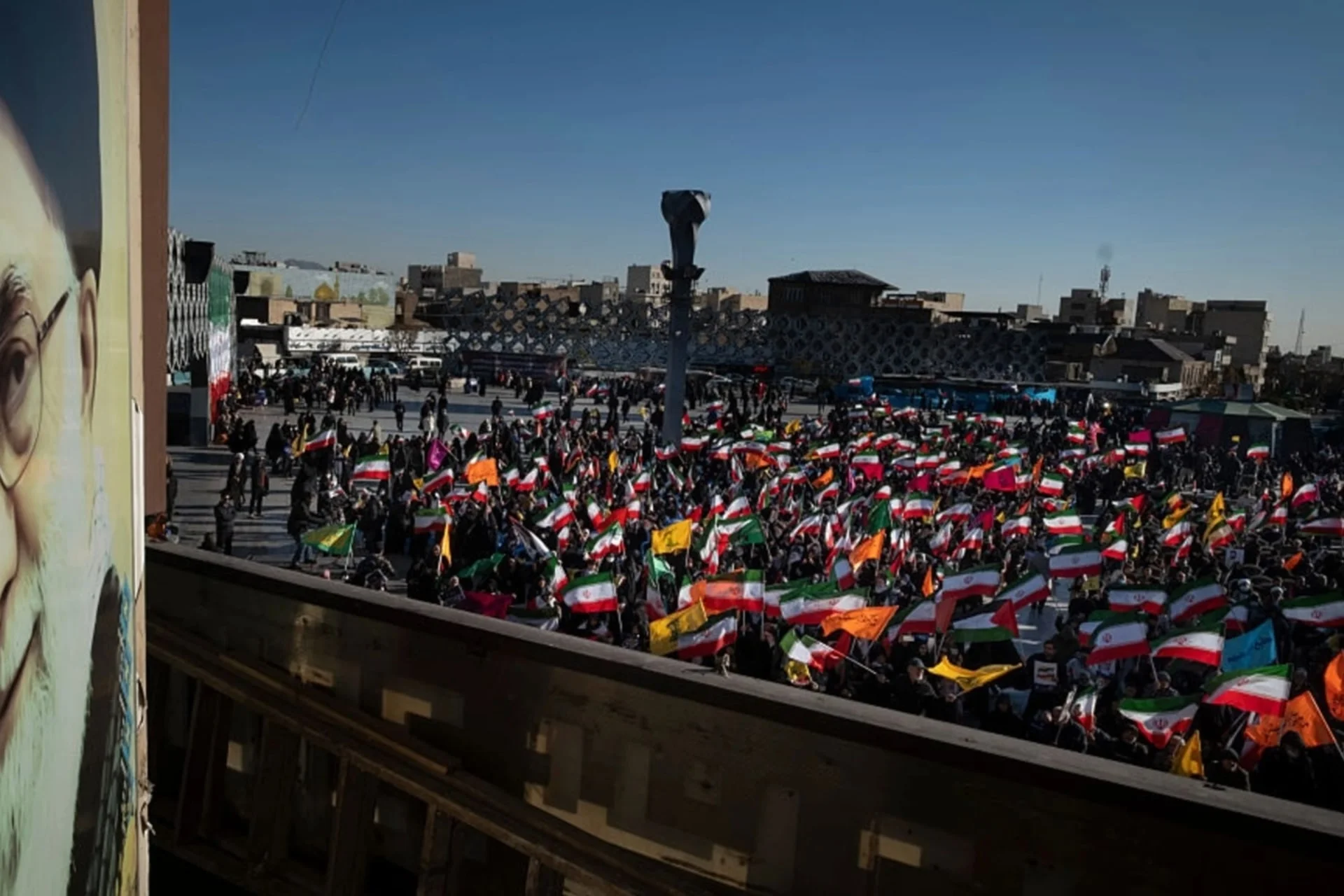
Global Rallies Demand Iran Regime Change as Geopolitical Tensions Escalate
Thousands worldwide, including Munich, London, and Tokyo, rallied for Iran regime change, urged by opposition figures and backed by US statements, as nuclear talks loom amid military posturing.