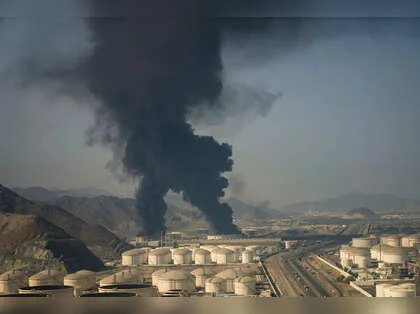
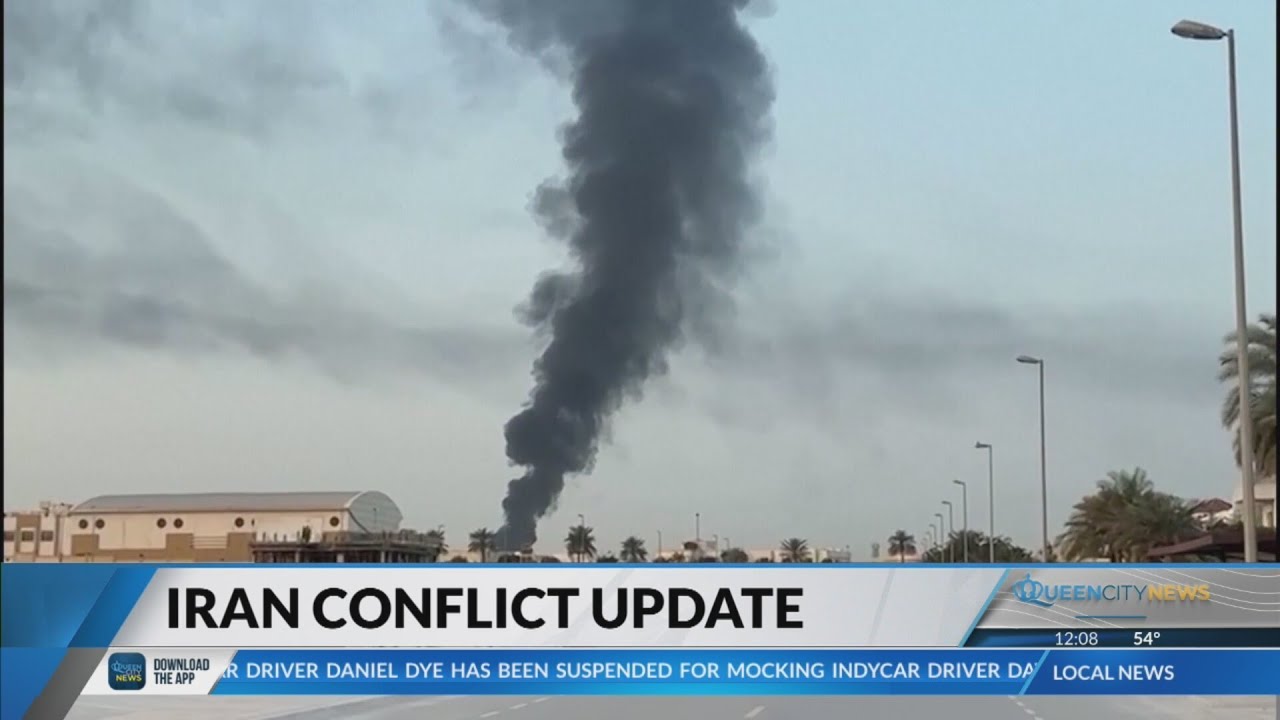
The global economy was thrust into a deeper crisis Thursday as Iran intensified its military actions, launching retaliatory strikes against critical oil and gas facilities across the Persian Gulf. This dramatic escalation follows an Israeli attack on a key Iranian gas field, pushing international crude prices to unprecedented highs and sending shockwaves through stock markets worldwide. The unfolding conflict, now in its 20th day, has not only claimed over 1,000 lives in Lebanon amid renewed fighting with Hezbollah but has also exposed potential fissures in the closely watched alliance between the United States and Israel, as leaders’ public statements reveal diverging perspectives on the prosecution of the war.
Mounting Tensions and Escalating Attacks
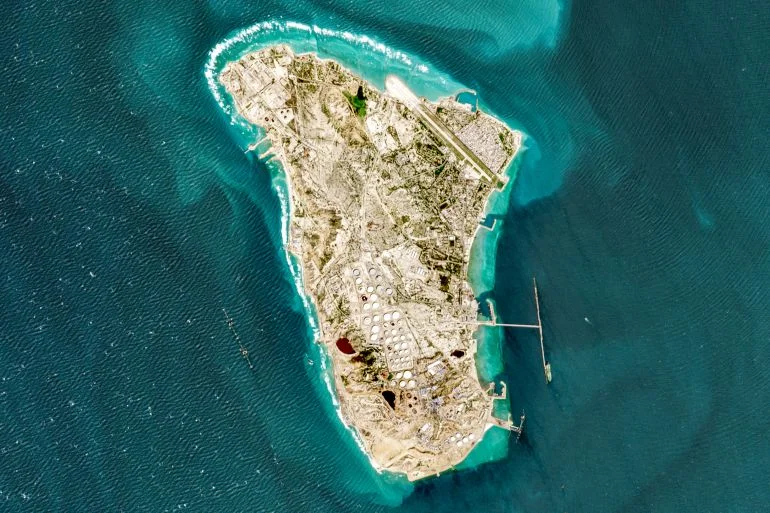
The latest surge in hostilities began with an Israeli strike on Iran's South Pars gas field, a move that prompted immediate and severe retaliation from Tehran. In response, Iranian forces targeted energy infrastructure in other Middle Eastern nations, further exacerbating an already precarious global energy supply chain. This tit-for-tat escalation has seen Brent crude oil, the international benchmark, spike by more than 60% since the onset of the conflict, signaling dire economic consequences for nations reliant on stable energy markets. The scale of the damage from these attacks is profound; Qatar Energy, a cornerstone of global natural gas supply, disclosed late Thursday that Iranian missile strikes on its Ras Laffan liquefied natural gas (LNG) facility could render it inoperable for up to five years, incurring an estimated loss of $20 billion annually in export revenue. Production at the facility had already been halted due to earlier assaults, indicating a protracted period of disruption even before the full extent of the latest damage was assessed Newsday.
Divergence in Leadership and International Response
Amidst the escalating violence, a notable divergence in rhetoric between U.S. President Donald Trump and Israeli Prime Minister Benjamin Netanyahu has emerged, raising questions about the coordinated front against Iran. Trump issued a stark warning, threatening to "massively blow up the entirety" of Iran's gas field if attacks on its neighbors continue. Conversely, Netanyahu, speaking later on Thursday, declared that Iran would no longer be able to enrich uranium or produce ballistic missiles, a statement quickly followed by fresh Israeli alerts of incoming Iranian missiles, with sirens blaring from Haifa to the Sea of Galilee. This public difference in emphasis regarding Israel’s initial strike on the Iranian gas field — the catalyst for the current wave of retaliatory attacks — suggests a potential strategic disconnect between the two leaders, which could significantly influence the conflict's trajectory and eventual resolution. Their apparent lack of complete synchronicity may embolden Iran or complicate efforts to de-escalate the situation, as Gulf allies reportedly urge Trump to rein in Netanyahu. On the international stage, the European Union has called for a moratorium on attacks on crucial energy and water infrastructure, insisting on freedom of navigation in the Strait of Hormuz, a vital artery for global oil shipments. Meanwhile, the UN Security Council convened an urgent closed-door meeting at Bahrain's request, where the 15-member body, with Russia and China abstaining, adopted a resolution demanding an immediate halt to Iran's targeting of civilian infrastructure and threats to navigation Newsday.
Analysis: The Geopolitical and Economic Fallout
The current escalation represents a critical juncture in the long-standing geopolitical tensions of the Middle East, threatening to unravel decades of delicate balance and plunge the global economy into uncharted territory. Beyond the immediate spikes in oil prices, the deliberate targeting of energy infrastructure in the Gulf, particularly facilities like Qatar's Ras Laffan LNG complex, signals a strategic shift in conflict tactics. This isn't merely about disrupting oil flows from the Strait of Hormuz, but a calculated move to cripple the long-term energy production capabilities of key global suppliers. The ramifications extend far beyond the price at the pump; industries reliant on stable energy costs, from manufacturing and transportation to agriculture, face significant inflationary pressures. The potential five-year repair timeline for Qatari facilities, for instance, means a prolonged period of reduced supply, pushing up the price of natural gas, a critical component for electricity generation, industrial processes, and even residential heating in many parts of the world. Moreover, the disruption highlights the intricate interdependencies of global supply chains. As Newsday notes, essential raw materials such as helium, crucial for semiconductor manufacturing, and sulfur, vital for fertilizers, are also being affected. This bottlenecking of critical inputs will inevitably lead to higher costs for consumer goods, further fueling inflation and potentially triggering a broader economic downturn. The apparent disunity between the US and Israeli leadership also introduces an element of unpredictability, potentially creating a vacuum that other regional and global powers might seek to exploit, further destabilizing an already volatile region. The stakes are exceptionally high, not just for the immediate combatants but for every nation connected to the global economy.
Humanitarian Toll and Regional Instability
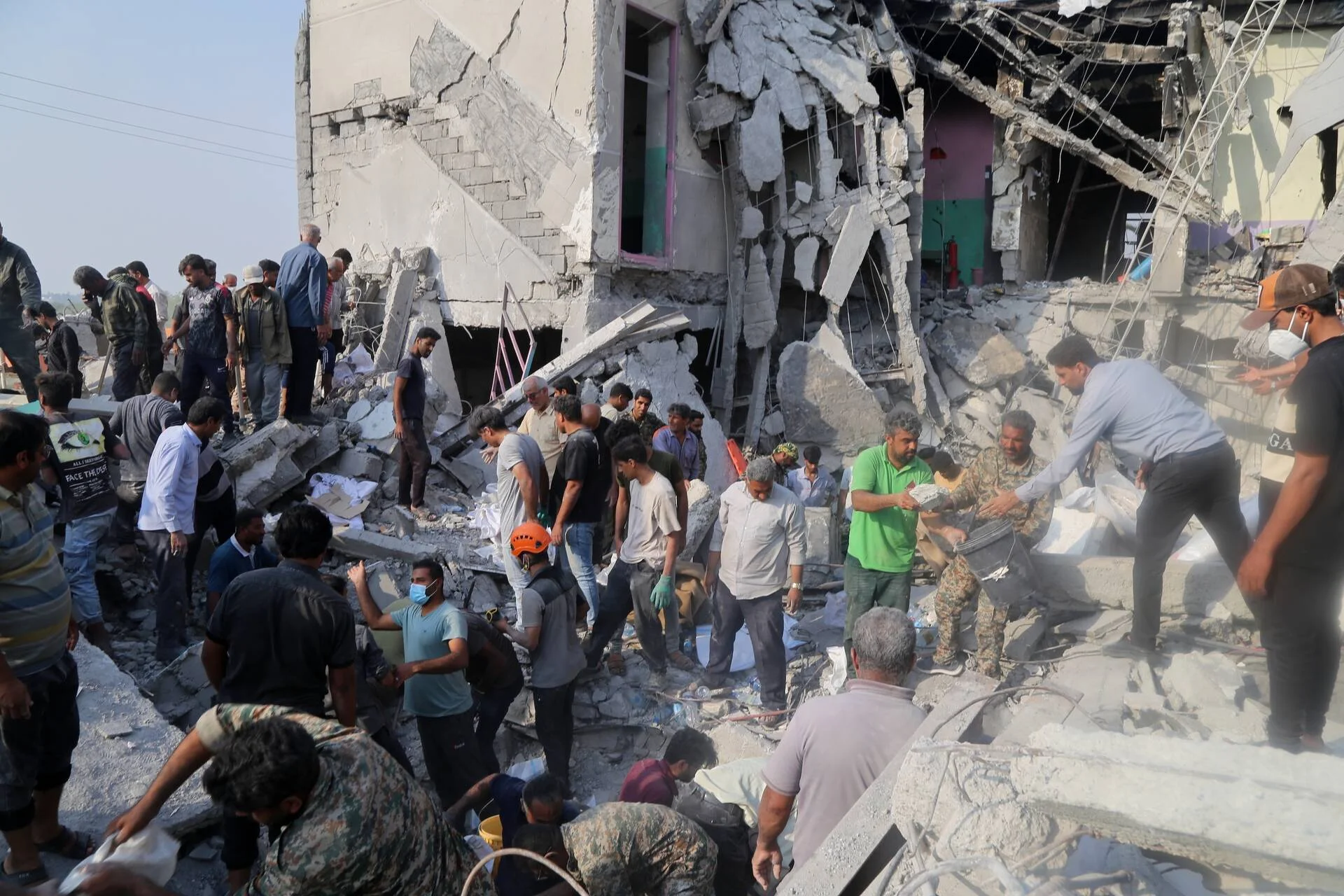
While economic concerns dominate headlines, the human cost of the conflict continues to mount, particularly in Lebanon, where Israeli strikes have resulted in over 1,000 fatalities amid renewed clashes with Hezbollah. This tragic count underscores the widespread suffering inflicted by a conflict that threatens to engulf broader swaths of the Middle East. Inside Israel, despite the barrage of missile attacks from Iran—thirteen alerts in a single day, one of the most active periods yet—emergency services reported no casualties from the latest launches. However, a previous attack in the Kiryat Shmona area critically injured one person, and a direct hit damaged a building in the northern city, which has been a repeated target for both Iran and Hezbollah. The constant threat of missile attacks has forced widespread displacement and a state of perpetual alert for Israeli civilians. The EU, while rejecting calls from President Trump to join the fight directly, has vociferously condemned Iran's actions and emphasized the importance of safeguarding energy and water infrastructure, reflecting concerns about a potential large-scale refugee crisis in the region, a common and devastating byproduct of prolonged conflicts Newsday. The call for international cooperation to prevent such a crisis highlights the humanitarian fears that run parallel to the economic ones.
A Precarious Future for Global Energy and Trade
The escalating attacks on vital oil and gas facilities across the Persian Gulf have significantly heightened the risk of long-term disruption to global energy markets. The immediate concern revolves around the Strait of Hormuz, through which approximately 20% of the world’s oil transits. While European leaders are exploring ways "to ensure freedom of navigation" through this critical chokepoint, any sustained interference or closure would have catastrophic consequences for global trade and energy supply, far exceeding the current price spikes. Beyond the Strait, the complexity of restarting and repairing damaged energy infrastructure, such as liquefied natural gas (LNG) facilities and refineries, means that even if hostilities cease soon, a return to pre-conflict production levels will be a gradual and challenging process. This prolonged recovery period guarantees a sustained environment of elevated energy prices, impacting everything from fuel for transportation to raw materials for industries. The ripple effects extend to crucial commodities beyond oil and gas: the obstruction of vital raw materials like helium, essential for manufacturing computer chips, and sulfur, a key component in fertilizers, portends potential shortages and price increases across diverse sectors, from high technology to agriculture. Such pervasive disruption underscores the intricate interconnectedness of the global economy and the far-reaching impact of regional conflicts. The international community faces the daunting task of de-escalation while simultaneously bracing for a period of economic instability and adapting to a potentially reconfigured global energy landscape.