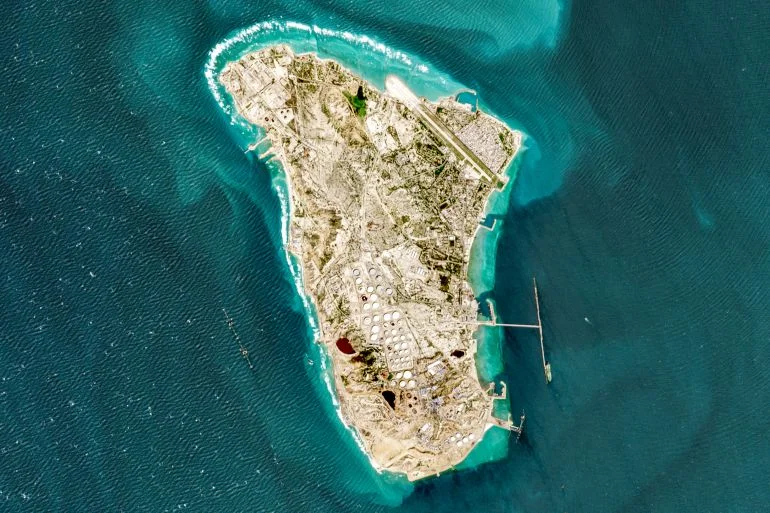
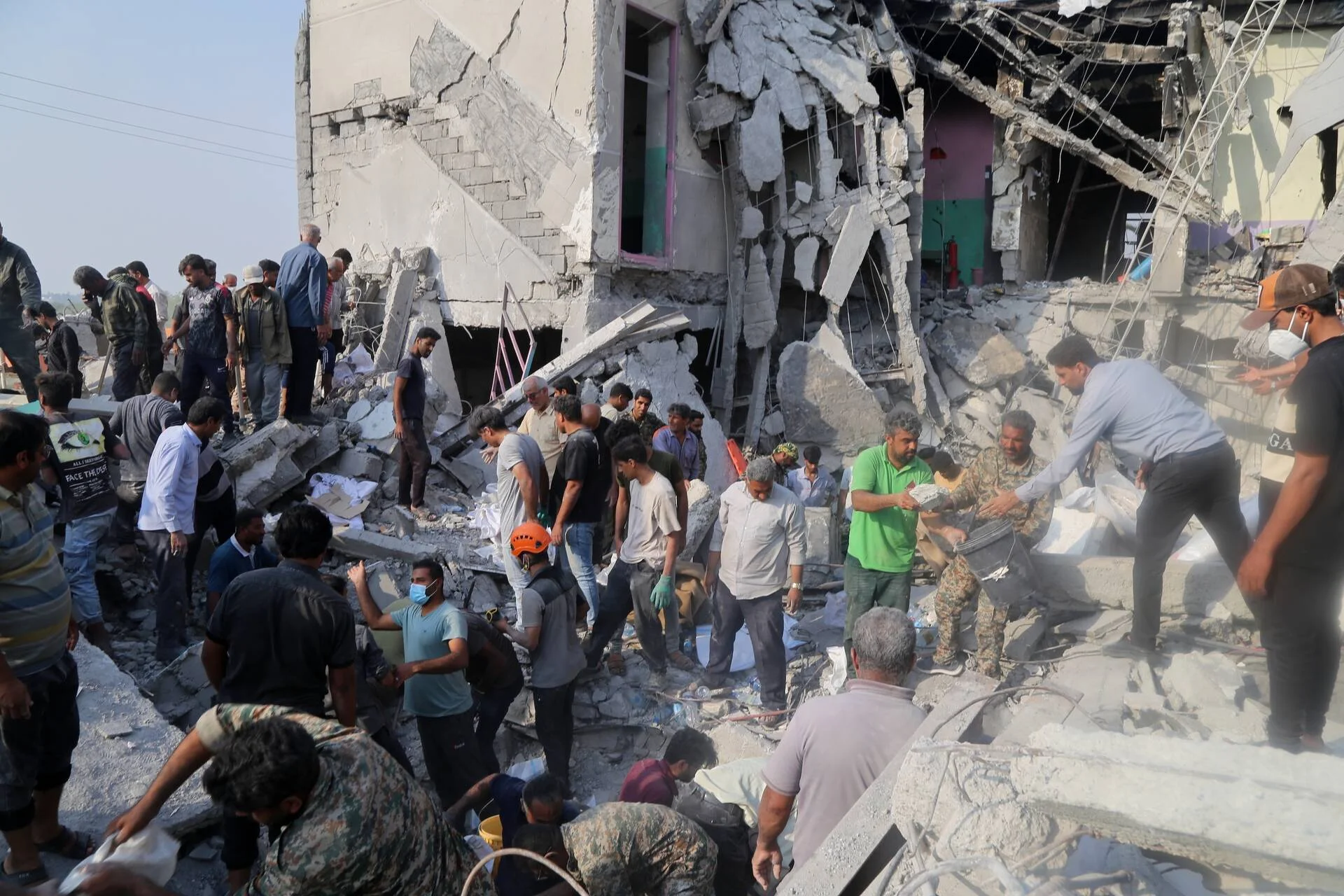
In a dramatic escalation of the ongoing conflict in the Middle East, President Donald Trump announced that the U.S. military conducted a major bombing raid on Kharg Island, Iran’s vital oil export hub, on Friday night. This military action comes as global oil prices have soared by over 40 percent since the U.S. and Israel initiated their war with Iran nearly two weeks ago, largely due to Iran’s effective blockade of the Strait of Hormuz. The strait, a critical chokepoint, facilitates the passage of one-fifth of the world’s oil supply, and its closure has sent shockwaves through international markets, pushing benchmark oil prices above $103 a barrel, a level not seen since 2022, as reported by The New York Times. President Trump stated that while he directed the Pentagon to "totally obliterate" military forces on Kharg Island, he specifically instructed the U.S. military to avoid damaging the island's oil infrastructure "for reasons of decency," a decision he vowed to reconsider if Iran continues to impede maritime traffic through the Strait of Hormuz.
Background and Context
The current military engagement in the Middle East, marked by this latest U.S. strike, has its roots in a period of escalating tensions between the United States, Israel, and Iran. The Trump administration has long maintained a hawkish stance towards Tehran, vacillating between calls for the overthrow of the Iranian theocratic government and a willingness to accept new leadership from within the regime, provided it complies with U.S. demands. The conflict officially began on February 28th, when President Trump announced the commencement of a joint U.S.-Israeli bombing campaign against Iran. This action followed earlier widespread protests within Iran, which saw thousands of demonstrators calling for governmental change brutally repressed by state forces, resulting in an estimated thousands of deaths and imprisonments, as detailed by The New York Times. The strategic importance of the Strait of Hormuz has been a recurring flashpoint, with Iran having previously used its control over the waterway as leverage against international pressure. The current blockade of the strait, however, appears to have caught the Trump administration largely unprepared for the ensuing oil shock, a development President Trump has repeatedly dismissed as temporary while asserting the war would conclude swiftly.
Key Developments
The U.S. military's bombing raid on Kharg Island marks a significant operational escalation in the ongoing conflict. According to President Trump's statements on Truth Social, as reported by The New York Times, the strikes targeted missile and mine storage sites, not the island's crucial oil infrastructure. Kharg Island, approximately one-third the size of Manhattan, is central to Iran's economy, handling roughly 90 percent of its crude oil exports before the conflict, thanks to its deep waters allowing large tanker access. The effective blockade of the Strait of Hormuz, in retaliation for U.S.-Israeli attacks, has sent global oil prices soaring, with a 40% increase in recent weeks. Despite discussions among Western officials about providing naval escorts for tankers, traffic through the strait remains largely halted, and wealthy nations' promises to release strategic oil reserves have failed to curb price hikes. The United States is further bolstering its military presence in the region, deploying an additional 2,500 Marines aboard three warships, adding to the estimated 50,000 troops already amassed there, though their specific role remains unclear, as noted by The New York Times. Meanwhile, President Trump has voiced frustration over the lack of direct military assistance from NATO allies in policing the Strait of Hormuz, calling their refusal a "very foolish mistake," despite their stated support for the U.S.-Israeli war. This sentiment was echoed in a Truth Social post where Trump claimed, "Because of the fact that we have had such Military Success, we no longer 'need,' or desire, the NATO Countries’ assistance — WE NEVER DID!" singling out Japan, Australia, and South Korea, according to Reuters. Domestically, the conflict has led to notable resignations, including the National Counterterrorism Center director, Joe Kent, who cited pressure from Israel and its American lobby as the reason for the war, as reported by NBC News.
Analysis: What This Means
The U.S. strike on Kharg Island, coupled with President Trump’s statements and the broader geopolitical landscape, underscores a deeply complex and volatile situation with far-reaching implications. The targeted nature of the strike, aiming at military infrastructure while ostensibly sparing oil facilities, suggests a calculated attempt to exert pressure on Iran without immediately crippling global oil supply further. However, the implicit threat to reconsider this restraint if the Strait of Hormuz remains blocked indicates a precarious balancing act. The oil price surge, reaching levels not seen in years, highlights the extreme vulnerability of the global economy to disruptions in this critical maritime corridor. This situation poses a significant challenge for the U.S. and its allies, as prolonged high oil prices could trigger widespread economic instability, complicating an already tense international climate. The divergence between NATO allies' support for the war and their unwillingness to commit military assets to secure the Strait of Hormuz, as noted by Reuters, reveals potential fractures within military alliances. Trump's dismissive remarks towards NATO's assistance, despite the clear strategic need to unblock the strait, could further strain these relationships, potentially undermining collective security efforts in the future. Furthermore, the internal dissent within the U.S. administration, evidenced by the resignation of the National Counterterrorism Center director, suggests growing unease regarding the motivations and objectives of the war, making a unified international response even more difficult to achieve.
Additional Details
The human cost of the ongoing conflict is escalating rapidly. Iran's representative to the United Nations reported to the Security Council that over 1,348 civilians in Iran have been killed since the war began, while officials in Lebanon stated nearly 800 people have died and over 2,000 injured, according to The New York Times. The U.S. military has also suffered casualties, with at least 13 American service members killed, including all six crew members in the recent crash of a KC-135 aerial refueling tanker in Iraq. While U.S. Central Command is investigating the crash, it has ruled out hostile or friendly fire. A potentially controversial incident involving a deadly strike on an Iranian elementary school on February 28th is also under investigation by Centcom, although officials declined to comment on reports suggesting U.S. responsibility. In a significant development, Iran's Supreme Leader, Mr. Khamenei, was reported to be "wounded and likely disfigured" on the first day of the Israeli-American attack. Adding to the internal pressures on the Iranian regime, thousands of people gathered in Tehran for an annual Quds Day rally, chanting "Death to Israel" and "Death to America," burning the Israeli flag. This rally, while showcasing loyalist support for the clerical leadership, also highlights the deep-seated anti-Western sentiment that could hinder any diplomatic resolution. President Trump, meanwhile, has seemingly tempered his calls for Iranians to rise up against their government, acknowledging the brutal repression they would face from armed forces, marking a shift from his earlier rhetoric promising that power would be "theirs to take."
Looking Ahead
The immediate future of the U.S.-Iran conflict hinges on several critical factors. The persistence of the Strait of Hormuz blockade and the corresponding surge in oil prices will continue to exert immense economic pressure globally, potentially forcing more decisive actions to reopen the waterway. The continued deployment of U.S. forces, such as the additional 2,500 Marines, signals a readiness for further military engagement, though whether this leads to escalation or a more concerted effort to secure shipping lanes remains to be seen. President Trump’s previously stated openness to a ceasefire, albeit on terms he deemed currently insufficient, as reported by NBC News, suggests that diplomatic avenues, however narrow, may still exist. However, the chasm between the U.S. and its NATO allies regarding direct military involvement in the Strait of Hormuz, as highlighted by Reuters, could complicate any international effort to de-escalate. The internal dynamics within Iran, particularly the health of Supreme Leader Khamenei and the potential for renewed public protests against the backdrop of war, will also play a crucial role. Observers will be watching for any shifts in U.S. policy, particularly regarding the stated intent to spare Iran’s oil infrastructure, a decision Trump has indicated he would reconsider if the blockade persists. The overall trajectory points towards continued volatility, with the global economy acutely sensitive to each military maneuver and political declaration in this increasingly dangerous regional conflict.