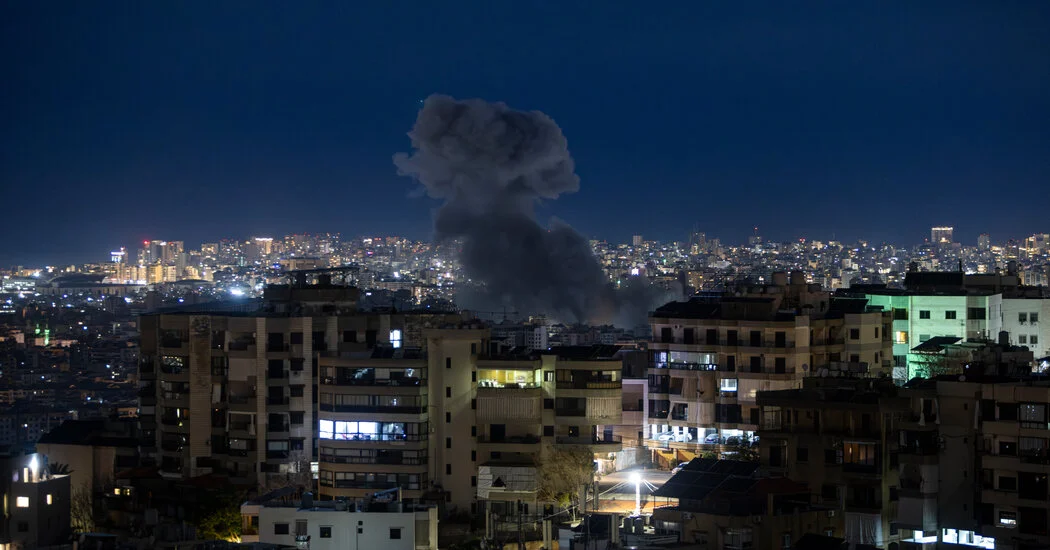
Iran dismisses US peace conditions for war termination, demanding reparations and recognition of Strait of Hormuz control, as Israel intensifies strikes against Iranian military capabilities.
Iran War Live Updates: Tehran Dismisses U.S. Cease-Fire Conditions as Israel Steps Up Attacks
In a rapidly escalating Middle Eastern conflict, Tehran has unequivocally rejected a 15-point peace plan proposed by the United States, which sought a comprehensive termination of Iran’s nuclear program and stringent limits on its missile arsenal. This dismissal comes as Israel, concerned that a premature end to hostilities might undermine its strategic objectives, has dramatically intensified its military campaign against Iranian targets. The volatile situation underscores a dangerous impasse, with both the U.S. and Iran asserting dominance in a war now in its fourth week, while regional actors grapple with the widening ramifications. The U.S. stance, articulated by White House Press Secretary Karoline Leavitt, suggests Iran is seeking an "exit ramp" due to the significant damage inflicted by combined American and Israeli strikes. However, Iranian officials, far from appearing defeated, have issued counter-demands for war reparations and recognition of their control over the strategically vital Strait of Hormuz, which they have effectively blocked to most shipping. This diplomatic deadlock, coupled with escalating military actions, paints a bleak picture for an immediate cessation of hostilities.
The current hostilities represent a significant escalation in decades of simmering tensions between Iran, the United States, and Israel. While the immediate trigger for the current conflict remains under wraps, the groundwork has been laid by long-standing disputes over Iran's nuclear ambitions, its ballistic missile program, and its extensive network of proxy forces across the Middle East. For years, the international community, led by the U.S. and Israel, has expressed grave concerns over Iran's potential development of nuclear weapons and its destabilizing influence in the region. The U.S. has consistently pursued a strategy of sanctions and diplomatic pressure, often backed by military posturing, to curb Tehran's capabilities. Israel, viewing Iran as an existential threat, has often operated with a pre-emptive military doctrine, targeting Iranian assets and proxies. The U.S. peace plan, reportedly circulated among diplomats, reflects these deep-seated concerns, aiming for a complete dismantling of what it perceives as the core threats posed by Iran, according to reports from The New York Times. The current conflict, now entering its second month, has seen a significant application of military force from both sides, shaping the hardened negotiating positions now on display.
The past 24 hours have witnessed a flurry of military actions and diplomatic posturing, underscoring the severe escalation of the conflict. The United States and Iran remain at an intractable standstill regarding peace negotiations. The U.S. presented a 15-point peace plan demanding a complete termination of Iran’s nuclear program and strict limitations on its missile arsenal. White House Press Secretary, Karoline Leavitt, asserted that Iranian forces had been "crushed" after four weeks of U.S. and Israeli strikes, suggesting the regime was now seeking an "exit ramp." However, Iranian officials offered a defiant counter-narrative, with state television broadcasting a statement insisting Tehran would only cease attacks if the United States paid war reparations and recognized Iran’s control over the Strait of Hormuz, a vital oil route it has effectively blocked. Iranian Foreign Minister Abbas Araghchi later stated unequivocally that Iran had no intention of negotiating, despite earlier private signals suggesting openness to talks, as reported by The New York Times.
Amidst this diplomatic stalemate, Israel has dramatically escalated its military operations. Fearing that U.S. President Trump might end the war before Israel achieved its objectives—dismantling Iran’s ballistic missile program and blocking its nuclear capabilities—Prime Minister Benjamin Netanyahu ordered a 48-hour campaign targeting Iran’s arms industry. This has coincided with sustained Israeli strikes in Lebanon, hitting the southern outskirts of Beirut, a stronghold of Hezbollah, and targeting gas stations linked to the group’s financial network. Concurrent with these actions, Iran’s military claimed to have fired cruise missiles at the U.S. aircraft carrier Abraham Lincoln, hours after a naval commander’s threat if the vessel entered range. The broader regional impact is palpable: Iraq’s prime minister summoned the U.S. Embassy’s chargé d’affaires to protest a strike that killed seven soldiers from Iran-backed Popular Mobilization Forces. Furthermore, a new wave of attacks saw missiles launched from Iran towards Israel, which the Israeli military is attempting to intercept. Missile and drone launches also targeted Persian Gulf nations, with the UAE, Saudi Arabia, and Kuwait reporting interceptions, and Bahrain attributing a fire at a facility to "Iranian aggression," according to The New York Times. These overlapping military actions reflect a conflict that is expanding geographically and intensifying in scope, despite—or perhaps because of—the lack of diplomatic progress.
The current impasse between Washington and Tehran, punctuated by Israel's aggressive military posture, is more than a mere diplomatic spat; it signifies a dangerous tightening of a geopolitical knot that risks unraveling the fragile stability of the entire Middle East. Iran's steadfast refusal of the U.S. peace plan, coupled with its non-negotiable demands for war reparations and control over the Strait of Hormuz, demonstrates a regime that perceives itself as far from defeated. This perception is bolstered by its continued ability to launch attacks against U.S. assets and regional allies, including the reported strike on the USS Abraham Lincoln and missile attacks on gulf states. The Strait of Hormuz, a choke point for global oil supplies, is central to Iran's leverage, highlighting its strategy to inflict economic pain on its adversaries and the world market if pushed too far. Blocking this vital artery represents not just a strategic military move but an explicit threat to global commerce, a card Tehran has played before and is now playing with full force.
Conversely, Israel's decision to independently escalate its attacks, even as the U.S. seeks a negotiated end, reveals deep distrust in Washington's commitment to achieving Israel's long-term security goals. Prime Minister Netanyahu's directive for a 48-hour campaign to cripple Iran's arms industry underscores Israel's preference for decisive military outcomes over potentially compromising diplomatic solutions. This divergence in strategic priorities between allies could strain U.S.-Israeli relations in the long run, even as they coordinate in the immediate conflict. The collateral damage is already evident across the region: Lebanon, Iraq, and Persian Gulf nations are drawn deeper into the conflict, facing direct strikes and increased insecurity. The civilian death tolls, now exceeding 1,300 in Iran and 1,100 in Lebanon, are a grim testament to the human cost, as detailed by The New York Times. The absence of effective congressional oversight in the U.S., with Republicans reportedly frustrated by a lack of crucial details on war objectives, further compounds the uncertainty surrounding the war's trajectory and potential endgame. This complex dynamic, where each actor prioritizes their immediate gains and long-term security, creates a highly unpredictable and perilous environment, with no clear path to de-escalation.
Beyond the direct military confrontations, the conflict's tentacles are reaching into various corners of the Middle East, exacerbating existing tensions and creating new flashpoints. The Popular Mobilization Forces (PMF) in Iraq, an umbrella organization for militias with strong ties to Iran, have become a focal point of U.S. retaliatory strikes against attacks on American forces. The recent strike that killed seven Iraqi soldiers from the PMF has prompted a "strongly worded letter of protest" from Iraq's prime minister, signaling Baghdad's deep concern over its sovereignty being compromised and its role as a de facto battleground for regional powers. This incident highlights the precarious position of Iraq, a nation still recovering from years of conflict and struggling to maintain a delicate balance between its Western and Iranian-backed factions, as reported by The New York Times.
Further afield, the concerns of Russia regarding the safety of its personnel at the Bushehr Nuclear Power Plant in Iran are a telling indicator of the pervasive regional instability. Alexei Likhachev, head of Rosatom, the Russian atomic energy corporation, confirmed plans for "several rounds of personnel evacuations" after a projectile hit the plant's grounds. This suggests that even key international partners with deep ties to Iran are now preparing for the worst, underscoring the perceived risk of further escalation or accidental strikes on critical infrastructure. Russia's continuous contact with the International Atomic Energy Agency concerning the situation at Bushehr also points to the potential for nuclear safety concerns to become intertwined with the ongoing military conflict. This broader ripple effect demonstrates how the conflict is not confined to the immediate combatants but is reshaping alliances, threatening civilian infrastructure, and prompting contingency plans from countries far more cautious about direct engagement.
The economic impact of the Strait of Hormuz blockade, though not discussed in detail in the provided New York Times report, is undoubtedly a major concern for global markets and a key leverage point for Iran. The Strait, through which a significant portion of the world's seaborne oil passes, being effectively blocked could trigger a global energy crisis, demonstrating Iran's capacity to inflict pain beyond military means. This economic weapon adds another layer of complexity to the negotiation process, as removing the blockade becomes a critical, non-military demand for many international actors. While the current conflict is centered in the Middle East, its implications are global, underscoring the interconnectedness of regional stability and international economic well-being.
The immediate future of the conflict remains highly unpredictable, with little indication of a diplomatic breakthrough on the horizon. The hardline stances adopted by both the United States and Iran, coupled with Israel's independent escalation, suggest a prolonged period of hostilities is more likely than a swift resolution. The ongoing missile and drone attacks across the Persian Gulf, necessitating air defense responses from the UAE, Saudi Arabia, and Kuwait, indicate a widespread regional engagement that could easily spiral further out of control. The continued targeting of critical infrastructure, as seen with the Israeli strike in Isfahan and the incident at the Bushehr Nuclear Power Plant, raises the stakes for both military and civilian populations. The human toll, already significant, is expected to mount as the conflict intensifies, placing immense pressure on international humanitarian organizations. The lack of detailed information provided to U.S. Congress members by the Pentagon, as highlighted by The New York Times, also suggests a lack of clear strategy or a desire to maintain operational secrecy, making it difficult for even informed stakeholders to anticipate next steps. All eyes will be on any subtle shifts in diplomatic rhetoric or military action that could signal a potential de-escalation, but for now, the region braces for continued conflict.
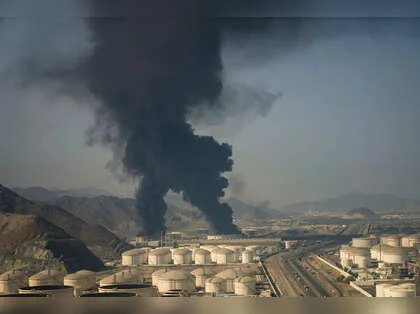
Iran's retaliatory strikes on Gulf energy infrastructure after an Israeli attack on its gas field send global oil prices skyrocketing and spark fears of long-term economic disruption. US-Israeli alliance shows cracks as leaders diverge on strategy.
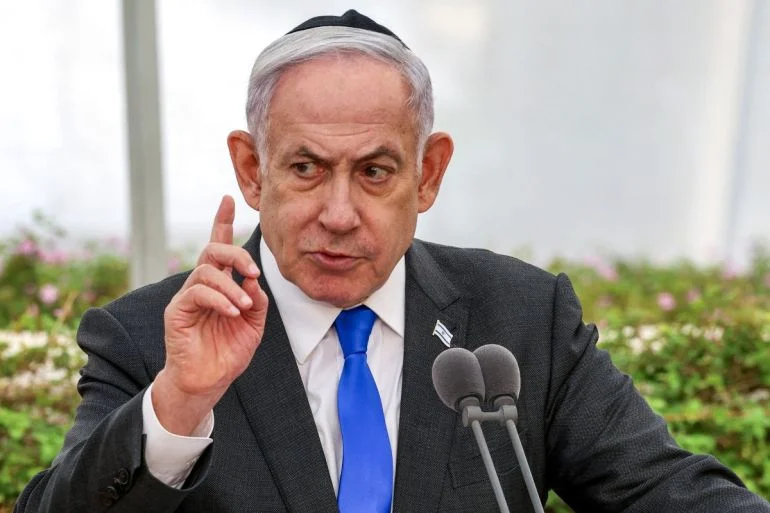
Amid rising US-Israel-Iran tensions, misinformation about Israeli PM Benjamin Netanyahu's alleged death spread online, fueled by a viral "six fingers" video, despite official confirmations of his active role.

Tensions in the Middle East have dramatically escalated following a joint US and Israeli military offensive against targets in Iran, with a significant US military build-up preceding the attacks.