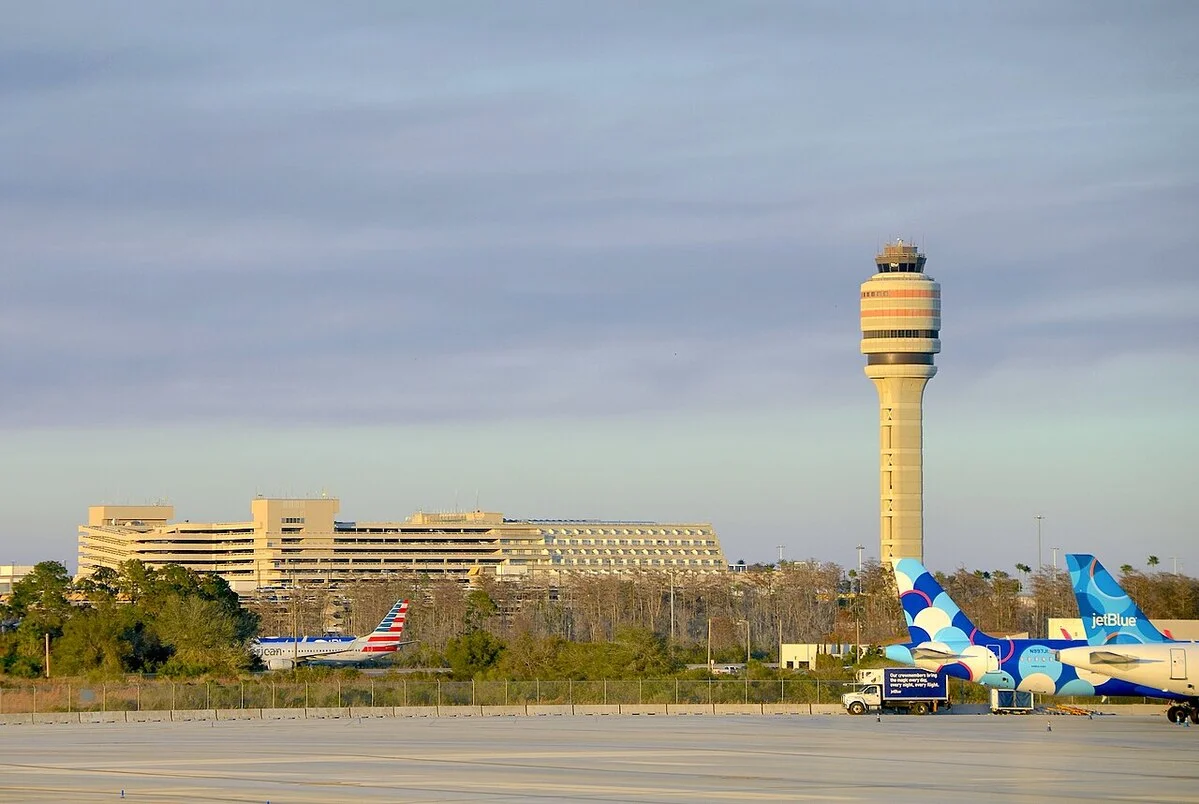
Orlando, FL – Flight operations at Orlando International Airport (MCO) are steadily returning to their regular schedule following a temporary ground stop on Sunday afternoon. The disruption stemmed from a fire alarm that sounded within the airport's air traffic control (ATC) tower, prompting an evacuation and a precautionary halt to arrivals and departures. However, airport officials have confirmed that the incident was not a fire but rather a cold-weather-induced activation of a sprinkler head.
Alarm Triggers Evacuation and Immediate Response
The incident unfolded around 3:30 p.m. when an alarm signaling water flow was activated inside the Orlando International Airport air traffic control tower. This immediately prompted a response from the Airport Aircraft Rescue and Fire Fighting (ARFF) crews. As a safety measure, air traffic control staff were evacuated from the tower while emergency personnel investigated the cause of the alarm. The swift action ensured the safety of personnel during the unfolding event.
Cold Weather Identified as the Culprit
Upon their arrival and subsequent investigation, ARFF crews quickly determined the source of the alarm. It was confirmed that a sprinkler head within the tower had activated due to the prevailing cold temperatures. Crucially, officials reported that no fire or other hazardous conditions were found, with the only issue being the water flow from the activated sprinkler. This rapid assessment allowed for a clearer understanding of the situation and prevented further escalation of concern.
Federal Aviation Administration Issues Ground Stop
During the brief period that air traffic control staff were evacuated from the tower, the Federal Aviation Administration (FAA) issued a temporary ground stop for Orlando International Airport. This measure is standard procedure in situations where air traffic control capabilities are compromised, even temporarily. The ground stop ensured that no new flights were cleared for departure to MCO, minimizing potential complications while the incident was being resolved. For more details on the initial report, you can refer to WKMG.
Operations Resume as Staff Return to Tower
Once ARFF crews had completed their investigation and confirmed the absence of a fire or other dangers, air traffic control staff were promptly cleared to return to the tower. With controllers back in position, the FAA was able to lift the temporary ground stop, paving the way for the resumption of normal flight operations. Airport officials quickly communicated that they were working to gradually restore the flow of air traffic, minimizing the lingering impact on passengers and airlines.
Flight Operations Gradually Returning to Normal
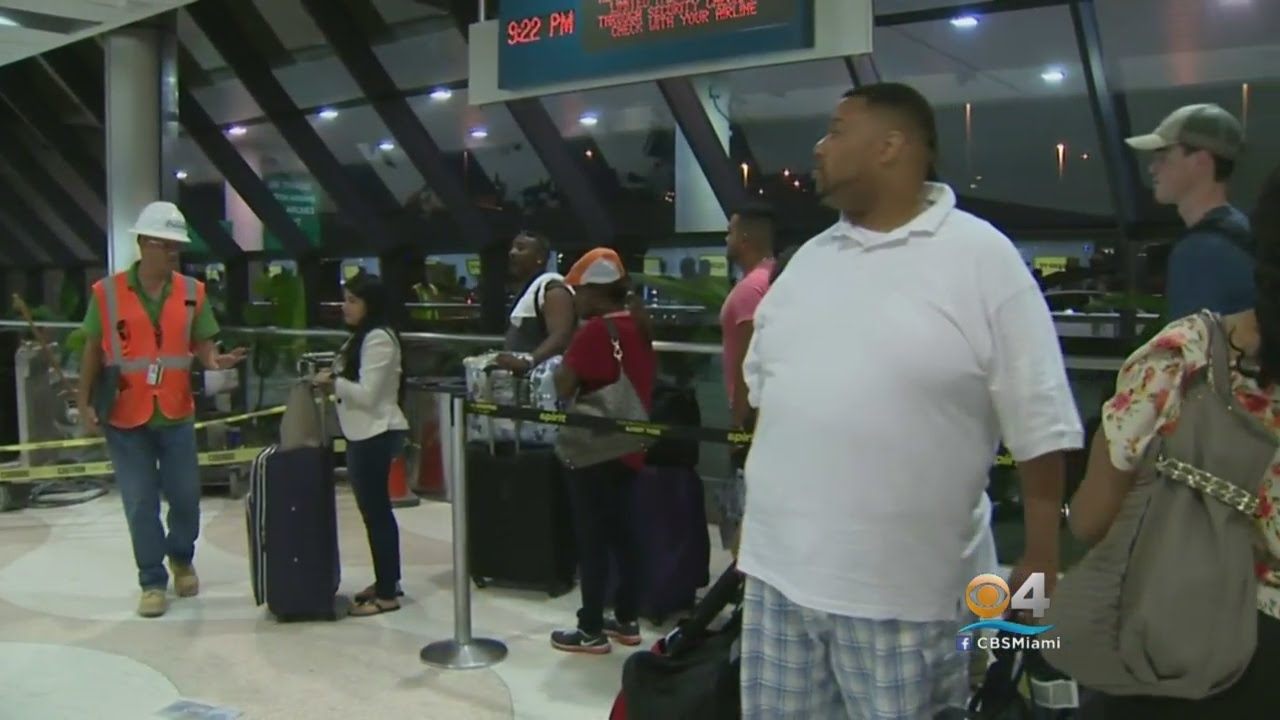
Following the lifting of the ground stop and the return of ATC staff, Orlando International Airport commenced the process of bringing its flight operations back to normal. While an immediate return to full capacity takes some time, airport authorities confirmed that flights were gradually being processed and departures and arrivals were re-establishing their rhythm. Passengers affected by the brief disruption were advised to check with their respective airlines for the latest updates on their flight status. This incident underscores the intricate systems in place at major airports and the rapid response protocols designed to handle unexpected events, as reported by WKMG.