Supreme Court's Tariff Reversal Roils Global Trade, Sparks Economic Uncertainty
The US Supreme Court has ruled Trump-era tariffs based on IEEPA unlawful, creating widespread uncertainty for global trade, corporate refunds, and future U.S. tariff strategy.

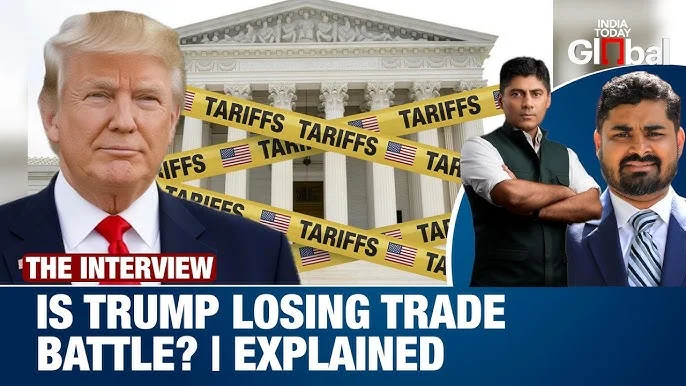
In a significant legal and economic bombshell, the United States Supreme Court delivered a six-to-three ruling this week, declaring tariffs implemented by the Trump administration under the International Emergency Economic Powers Act (IEEPA) as unlawful. This landmark decision has sent reverberations across global financial markets and trade desks, overshadowing immediate concerns over a reported slowdown in US economic growth and an acceleration in inflation. While equity prices saw a modest increase following the news, the long-term implications for international trade agreements, corporate liabilities, and the future of American trade policy remain profoundly uncertain. The ruling effectively dismantles a key instrument of the previous administration's aggressive trade strategy, forcing a re-evaluation of how the U.S. can legitimately wield tariffs to achieve its economic and geopolitical objectives.
Background and Context: The Rise and Fall of IEEPA Tariffs
The saga of the IEEPA tariffs began in 2025 when the Trump administration, citing a national emergency stemming from the persistent US trade deficit, levied tariffs on an extensive array of goods from nearly every country in the world. This marked an unprecedented application of the 1977 International Emergency Economic Powers Act, a statute primarily designed to grant the president authority to restrict economic relations during genuine national emergencies, conspicuously making no mention of tariffs as a permissible tool. For decades, the US trade deficit has been a subject of economic debate, but its characterization as an "emergency" under IEEPA was a novel legal interpretation. The administration argued that the deficit posed an existential threat requiring such drastic measures. However, as Deloitte's Global Economic Update highlights, the plaintiffs vehemently contested this, arguing that a long-standing trade deficit does not constitute an emergency in the context of IEEPA's original intent. The Supreme Court ultimately sided with the plaintiffs, striking down the expansive use of the Act for tariff imposition, thus reshaping the landscape of presidential trade authority and leaving a significant void in the administration's tariff toolkit.
Key Developments: Uncertainty in Trade and Finance
The Supreme Court's decision has created immediate and multifaceted implications for both government and businesses. Business groups have largely welcomed the ruling, with many now harboring expectations of reimbursement for tariffs previously paid, potentially injecting significant capital back into the private sector. However, the Court provided no clear directive on refunds, leaving the matter open to extensive legal challenges and likely protracted, case-by-case proceedings. Should substantial refunds be mandated, this could significantly impact the government's fiscal deficit, adding a stimulative albeit unplanned financial impulse to the economy, as reported by Deloitte. Conversely, the administration is widely expected to pivot to alternative legal tariff mechanisms, which could mute the fiscal impact of widespread refunds. The impact extends beyond financial considerations to the very architecture of international trade agreements forged under the threat of IEEPA tariffs. In the past year, the administration utilized the leverage of these tariffs, and the threat of even higher ones, to pressure trading partners into new deals. These agreements often saw the US maintaining historically high tariff rates (15%-20%) in exchange for other nations reducing their own tariffs, boosting US goods purchases, and increasing investment in the US. With the IEEPA tariffs now nullified, the US's negotiating leverage has diminished, casting doubt on the future stability and enforcement of these recently brokered trade accords.
Analysis: A Return to Traditional Trade Tools and Heightened Geopolitical Stakes
The Supreme Court’s IEEPA ruling represents more than just a legal defeat for a specific tariff regime; it signifies a potential recalibration of US trade policy, pushing it back towards historically established – and often more cumbersome – legal frameworks. The previous administration's heavy reliance on IEEPA allowed for swift, broad-based tariff implementation, largely bypassing congressional oversight and the more targeted approaches outlined in other statutes. This ruling now necessitates a shift towards a more segmented, and potentially slower, strategy for future trade disputes. For businesses, this means a likely period of heightened uncertainty as the administration identifies and attempts to implement new legal avenues for tariffs. The prospect of significant tariff refunds, while welcomed by importers, could also further complicate supply chain planning if not handled uniformly or expeditiously. From a geopolitical standpoint, the US has lost a powerful, albeit controversially employed, bargaining chip. Future trade negotiations may require more traditional diplomatic persuasion and the strategic deployment of other legal tariff tools, each with its own limitations and requirements. This ruling could also embolden other nations to challenge US trade actions more aggressively, knowing the broadest and most flexible unilateral tariff authority has been curtailed. The global trading system, already strained by protectionist tendencies, now faces another layer of complexity as the US seeks to redefine its trade enforcement posture without the sweeping powers of IEEPA.
Additional Details: Exploring Alternative Tariff Authorities
With IEEPA off the table, attention immediately shifts to other statutory authorities available to the US president for imposing tariffs, though each comes with significant limitations. Historically, the US Constitution grants Congress sole authority over tariffs in peacetime. However, Congress has delegated this power in limited circumstances through several acts. Deloitte outlines several of these options. Section 122 of the Trade Act of 1974 permits tariffs to address a balance of payments deficit. This law remains unused, largely because the US manages a trade deficit, not a balance of payments deficit in the context of a floating exchange rate system. For tariffs under Section 122, the president must determine "fundamental international payments problems" exist, a much higher bar than simply citing a trade deficit. Another dormant option is Section 338 of the Tariff Act of 1930, part of the infamous Smoot Hawley Act. This allows retaliation against foreign discrimination of US goods, but its relevance is largely negated by modern multilateral trade agreements prohibiting such discriminatory practices. Section 232 of the Trade Expansion Act of 1962 is currently in use, allowing import restrictions based on national security threats. This has been applied to steel, aluminum, and semiconductors. However, expanding this to hundreds or thousands of products would likely face robust legal challenges. Finally, Section 301 of the Trade Act of 1974 empowers the USTR to investigate unfair foreign trade practices and recommend tariffs. While extensively used, particularly against China for intellectual property violations, it is a time-consuming process and would face significant criticism if used to implement broad, across-the-board tariffs in place of IEEPA's sweeping measures.
Looking Ahead: A Fragmented Tariff Strategy and Renewed Congressional Scrutiny
The immediate aftermath of the Supreme Court's ruling will likely see the US administration scrambling to identify and implement alternative tariff strategies. It is highly probable that we will observe a more fragmented approach, utilizing a combination of the specific statutes outlined above, each targeting particular products, countries, or unfair trade practices rather than a universal tariff regime. This will inherently be a slower and more legally complex process, potentially involving more specific economic and national security justifications. The lack of a single, overarching tariff authority could also empower Congress to reassert its constitutional role in trade policy debates, leading to more robust legislative engagement on future tariff decisions. For companies worldwide, this fragmented approach means navigating a patchwork of potential tariffs and trade restrictions, demanding increased vigilance and diversified supply chain strategies to mitigate risks. The trade landscape has become significantly less predictable, with a move away from easily definable, broadly applied tariffs towards a more nuanced, legally constrained, and politically scrutinized set of trade tools. The global economy will be closely watching how the US navigates this new reality, seeking clarity on its long-term commitment to multilateral trade norms versus its desire for unilateral tools to address perceived imbalances.
Related Articles
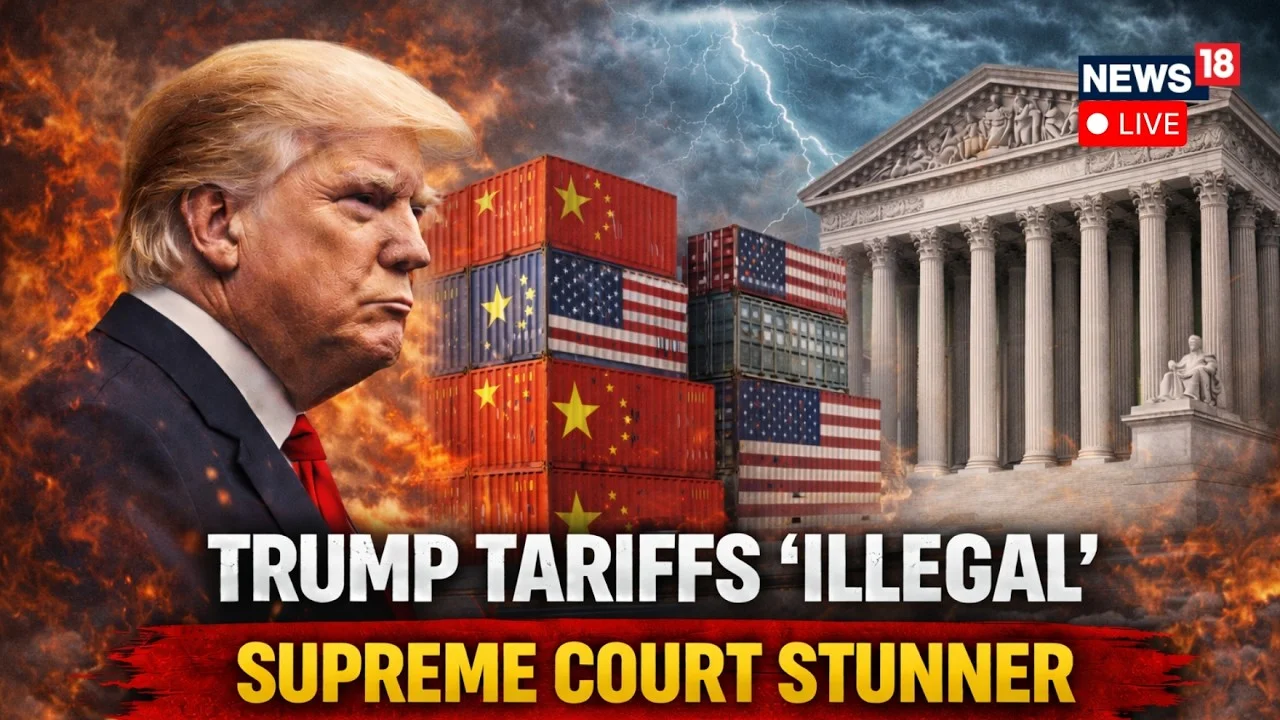
Supreme Court Strikes Down Trump's National Emergency Tariffs, Reshaping Global Trade
The US Supreme Court has ruled Trump-era tariffs implemented under national emergency powers unlawful, creating uncertainty for global trade and potential economic shifts.