Trump Warns of 'Military Option' if Iran Rejects Nuclear Deal Amid Escalating Tensions
President Trump signals potential military action from Diego Garcia if Iran refuses a deal, as White House pushes diplomacy despite Iranian fortification of nuclear sites.

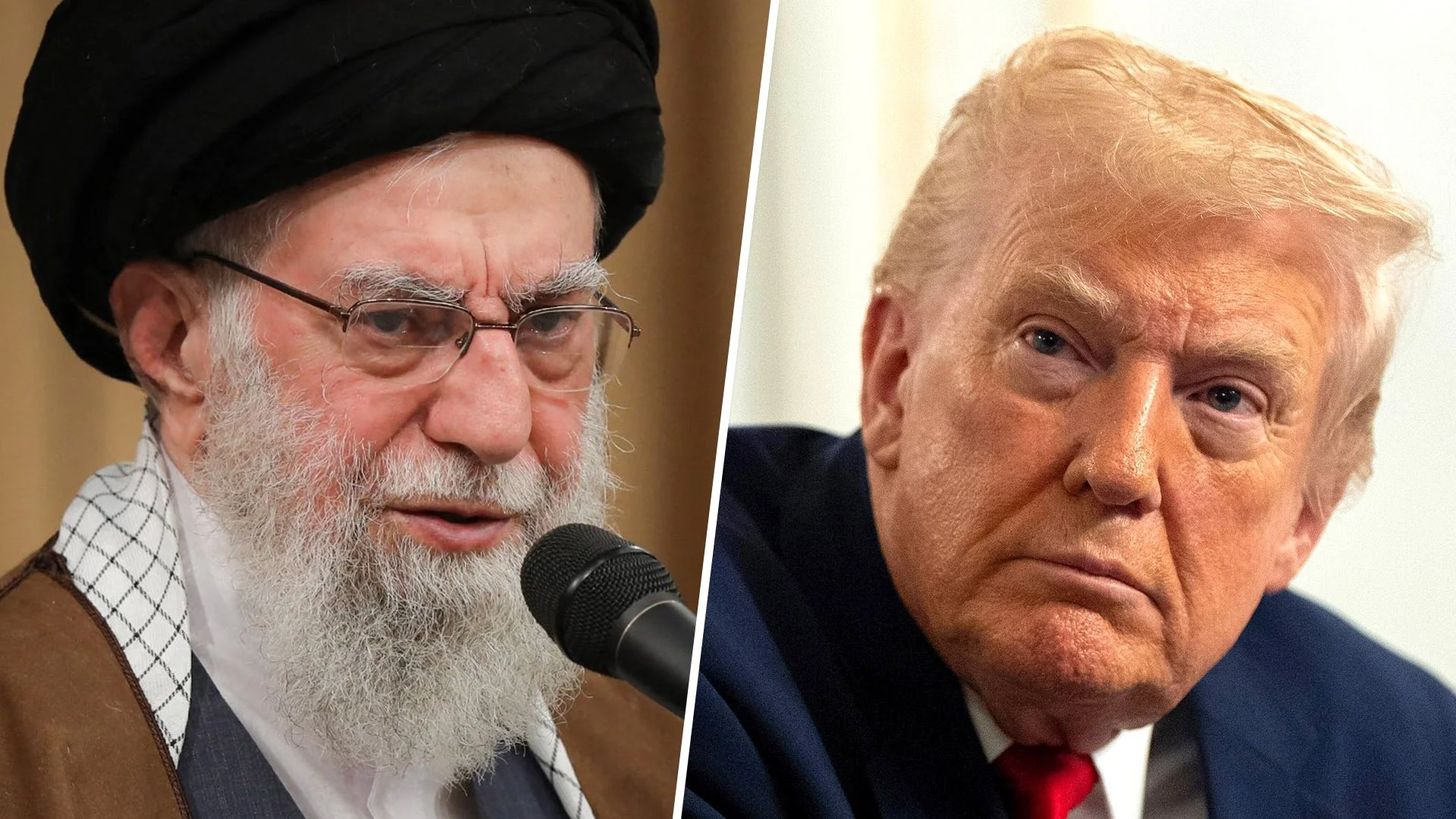
In a significant escalation of rhetoric, United States President Donald Trump has explicitly warned of a potential "military option" should Iran decline to engage in a diplomatic resolution regarding its nuclear ambitions. Speaking on Wednesday, President Trump hinted at the strategic Indian Ocean base of Diego Garcia as a possible launchpad for such action, underscoring the growing impatience from Washington. This assertive stance comes amidst revelations that Iran has been actively repairing and fortifying several nuclear and military installations previously targeted in conflicts with Israel and the US, suggesting a hardening of its position. The unfolding situation highlights a precarious diplomatic tightrope walk, with the US administration publicly preferring negotiation while simultaneously demonstrating its readiness for more forceful measures, as reported by Iran International.
Mounting Tensions: A History of Brinkmanship
The current standoff between the United States and Iran is not an isolated incident but rather the latest chapter in a long-standing history characterized by mistrust, proxy conflicts, and attempts at nuclear containment. Decades of strained relations, punctuated by sanctions, covert operations, and diplomatic deadlocks, have consistently brought the two nations to the precipice of direct confrontation. The 2015 Joint Comprehensive Plan of Action (JCPOA), a multinational agreement designed to limit Iran's nuclear program in exchange for sanctions relief, represented a brief departure from this trajectory. However, the US withdrawal from the agreement in 2018 under President Trump, who deemed it insufficient, significantly exacerbated tensions and paved the way for the current precarious situation. Since then, the US has reimposed stringent sanctions, and Iran has gradually scaled back its commitments to the agreement, pushing its nuclear program further, a dynamic that has been extensively covered by global news outlets monitoring the region's geopolitical shifts. The current rhetoric, particularly the explicit mention of a "military option," harks back to previous periods of heightened alert, reminiscent of bellicose statements exchanged during perceived Iranian provocations or advancements in its nuclear technology, demonstrating a cyclical pattern of escalating threats and counter-threats that characterize this complex relationship.
Trump's Ultimatum and Iran's Fortifications: Key Developments
The core of the current crisis centers on President Trump's recent pronouncements, signaling a critical juncture in US-Iran relations. On Wednesday, President Trump made it unequivocally clear that "if Iran refuses to make a deal, the United States may need to use Diego Garcia," a direct and chilling reference to potential military action. This statement, reported by Iran International, leaves little ambiguity regarding the US administration's readiness to consider non-diplomatic solutions. White House press secretary Karoline Leavitt echoed this sentiment, stating, "There are many arguments one can make in favor of a strike against Iran. President Trump prefers diplomacy. Iran would be wise to make a deal." This dual messaging – a preference for diplomacy underscored by a credible threat of force – aims to push Tehran towards the negotiating table on US terms. Concurrently, US Energy Secretary Chris Wright reinforced the commitment to prevent Iran from acquiring nuclear weapons, asserting, "The United States will deter Iran from acquiring nuclear weapons 'one way or the other'."
Adding another layer of complexity and urgency to the situation are the recent satellite images reviewed by Reuters. These images reveal that Iran has taken substantial steps to "repair and fortify several nuclear and military sites that were struck in last year’s conflict with Israel and the United States." This development, also highlighted by Iran International, indicates that far from capitulating, Tehran is actively strengthening its defenses and potentially its capabilities, despite the intense international pressure and past military engagements. The fortification efforts suggest a proactive strategy by Iran to enhance the resilience of its strategic infrastructure against future attacks, complicating any potential military calculus for the US and its allies. The interplay between Trump's warning and Iran's defensive actions creates a volatile environment where miscalculation could have severe consequences. News platforms like Sky Sports, while focused on football, are indicative of the broader global news cycle that often includes significant geopolitical developments impacting international stability. Even business-focused publications, such as Business Standard, frequently track such global events due to their profound implications for financial markets and international trade, demonstrating the widespread impact of these tensions.
Analysis: The High-Stakes Geopolitical Chessboard
President Trump's explicit mention of Diego Garcia as a potential staging ground for military action against Iran introduces a new, tangible dimension to the ongoing geopolitical chess match. While the use of "military option" has been part of the US lexicon regarding Iran for years, specifying a base like Diego Garcia — a strategic, albeit remote, US military facility in the Indian Ocean — serves multiple purposes. Firstly, it aims to imbue the threat with a greater sense of credibility and immediacy, moving beyond abstract warnings to a more concrete outline of potential operational capabilities. Secondly, it could be interpreted as a strategic psychological maneuver, designed to pressure Iran into serious negotiations by showcasing the geographic reach and logistical preparedness of US forces. However, this approach carries significant risks. By drawing a line in the sand with such specificity, the Trump administration may inadvertently limit its diplomatic flexibility. Should Iran continue to resist a deal, the administration could find itself painted into a corner, with public and international expectations for follow-through on the threat mounting. This scenario raises the specter of a military confrontation that few in the international community desire, due to its potential to destabilize the entire Middle East region and impact global energy markets.
Furthermore, Iran's ongoing fortifications of its nuclear and military sites suggest a calculated defiance rather than a willingness to capitulate under pressure. This response indicates that Tehran views any potential deal from a position of enhanced internal security and strategic resilience. Such actions strengthen their bargaining position, demonstrating that they are not easily intimidated and are prepared for various contingencies. For regional actors and global powers observing this escalating tension, the implications are profound. A military strike, even a limited one, could trigger a wider conflict, drawing in allies and adversaries alike, with unpredictable consequences for global trade, oil prices, and refugee flows. The challenge for the international community lies in finding a viable off-ramp that can de-escalate these tensions and bring both sides back to a diplomatic solution, ideally one that is more robust and sustainable than previous agreements. The current tit-for-tat between aggressive rhetoric and defensive build-up is a perilous path, and the world holds its breath to see if diplomacy can still avert a military confrontation.
Broader Implications and Regional Fallout
The potential for military action, however distant, casts a long shadow over the Middle East and beyond. Any direct military engagement between the US and Iran would undoubtedly trigger substantial regional fallout, impacting a complex web of alliances, proxy conflicts, and economic dependencies. Countries bordering Iran, particularly those with significant US military presence or historical animosities towards Tehran, would find themselves on high alert, potentially becoming unwilling participants in a broader conflict. The Strait of Hormuz, a critical choke point for global oil shipments, would almost certainly face disruptions, leading to significant spikes in international oil prices and sending shockwaves through the global economy. This economic instability could have far-reaching consequences, affecting everything from manufacturing costs to consumer prices worldwide. For India, as evidenced by the regular updates from Business Standard, such a conflict would be particularly concerning given its reliance on oil imports from the Middle East and its significant diaspora in the region. The security of its citizens and its economic interests would be directly threatened, necessitating swift and decisive foreign policy responses to mitigate the impact.
Beyond the immediate military and economic ramifications, there is the humanitarian crisis that would inevitably follow. Large-scale military operations often result in significant civilian casualties and displacement, exacerbating existing refugee crises and placing immense strain on international aid organizations. The destabilization of the region could also empower extremist groups, providing them with new opportunities to expand their influence and operations in the ensuing chaos. For the United States, a military intervention in Iran would represent a substantial commitment of resources and personnel, reminiscent of past engagements in the Middle East that have proven costly in both human and financial terms. It would also further strain international relations, potentially alienating allies who prefer a diplomatic approach and bolstering the narratives of adversaries. The current tensions therefore represent a pivotal moment, with the decisions made by Washington and Tehran having the potential to reshape the geopolitical landscape for decades to come, far beyond the immediate theaters of conflict. The stakes are immense, and the consequences of miscalculation are truly global in their scope.
Looking Ahead: The Diplomatic Tightrope and Wariness
The immediate future of US-Iran relations appears to hinge precariously on a delicate balance between diplomatic overtures and military posturing. The ball, to a significant extent, rests in Iran's court, as President Trump's administration has made it clear that a "deal" is their preferred outcome, albeit under the implied threat of force. The crucial question now is whether Tehran will perceive this as an ultimatum necessitating concession or as a provocation demanding further defiance. International efforts will likely intensify to de-escalate the situation, with various European powers and other stakeholders attempting to broker a pathway for dialogue. These efforts will be complicated by the deeply entrenched distrust between Washington and Tehran, as well as by the internal political dynamics within both nations. Observers will be closely watching for any signals from Iran, such as a willingness to return to the negotiating table without preconditions, or conversely, further advancements in its nuclear program that could solidify the US resolve for harsher measures. The role of regional powers will also be critical, as their reactions to any potential US strike or Iranian counter-response could significantly broaden or contain the conflict. The world watches, hoping that the diplomatic tightrope holds and that a peaceful resolution can still be found for this escalating and dangerous standoff.
Related Articles

India Crushes New Zealand in U-19 World Cup Amidst Global Diplomatic Efforts and Domestic Challenges
India secures a dominant win in the U-19 World Cup while international diplomacy unfolds between Ukraine and Russia, and domestic news highlights critical issues and events.