Trump Orders DHS to Avoid Protests in Democratic Cities Unless Requested
President Trump issues directive for Department of Homeland Security to stay out of protests in Democratic-led cities unless federal assistance is sought or federal property is jeopardized.

In a significant directive, U.S. President Donald Trump announced on Saturday that he has instructed the Department of Homeland Security (DHS) to refrain from engaging with protests in Democratic-led cities. This order comes with a crucial caveat: federal involvement is permissible only if federal help is explicitly requested by local authorities, or if federal property is under threat.
Federal Agents Spark Controversy in Minnesota
The President's announcement follows a period of heightened unrest and demonstrations, primarily ignited by the substantial deployment of Border Patrol and U.S. Immigration and Customs Enforcement (ICE) agents to Minnesota. This deployment became a focal point of controversy after federal agents were involved in the fatal shootings of two U.S. citizens, Renee Good and Alex Pretti. Federal agents claimed they were reacting to threats. However, multiple observers have stated that bystander videos contradict these claims of self-defense. Specifically, video footage of Pretti's death, verified by Reuters, reportedly undermines the Trump administration's assertion that he brandished a weapon before being fatally shot by officers.
Protecting Federal Property Remains a Priority
Despite the new order appearing to limit DHS's direct confrontation with protesters in streets and during raids, President Trump emphasized that ICE and Border Patrol would act aggressively to safeguard federal buildings. "We will not allow our Courthouses, Federal Buildings, or anything else under our protection, to be damaged in any way, shape, or form," Trump stated on social media. The President also asserted that cities are responsible for protecting their own state and local properties, while simultaneously placing the onus on state and municipal officials to assist in protecting federal property. He added that the federal government would provide assistance if requested, promising to "take care of the situation very easily and methodically."
Local Leaders Challenge Federal Deployments
The recent deployment of federal officers to Minneapolis is part of a broader pattern under the Trump administration, which has seen federal personnel, including law enforcement officers and National Guard members, dispatched to numerous cities predominantly governed by Democrats. These cities include Los Angeles, Chicago, Washington, D.C., and Portland, Oregon. President Trump has consistently defended these actions as necessary for enforcing immigration laws and controlling crime. However, local leaders in most of these cities have disputed this justification, arguing against the federal presence. The Trump administration had dispatched 3,000 federal officers to the Minneapolis area as part of an immigration crackdown, leading many of these officials into confrontations with protesters and activists.
Minnesota Officials Seek Federal Withdrawal
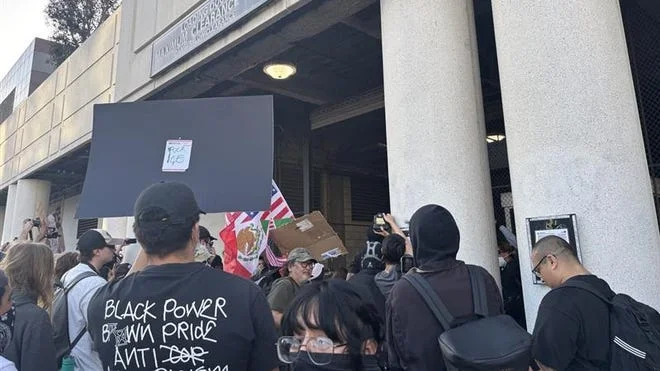
Thousands of protesters took to the streets in Minneapolis and other U.S. cities on Friday, demanding the withdrawal of federal immigration agencies from Minnesota in the wake of the fatal shootings of Good and Pretti. Minnesota officials have actively called on the Trump administration to end its immigration crackdown in the state. Minnesota Attorney General Keith Ellison and other officials sought a preliminary injunction to halt the federal operation, but a federal judge denied their request on Saturday, according to Reuters. At the time of reporting, the Department of Homeland Security, along with the offices of Minneapolis Mayor Jacob Frey and Minnesota Attorney General Keith Ellison, did not immediately respond to requests for comment regarding the President's new order or the ongoing situation.
Related Articles
Trump Hints at War Wind-Down Amid Escalating Middle East Tensions
As tensions escalate in the Middle East, former President Trump suggests winding down the conflict, while Iran intensifies attacks and threatens new targets, including US and Israeli officials globally. The US temporarily lifts some Iranian oil sanctions to stabilize markets.